
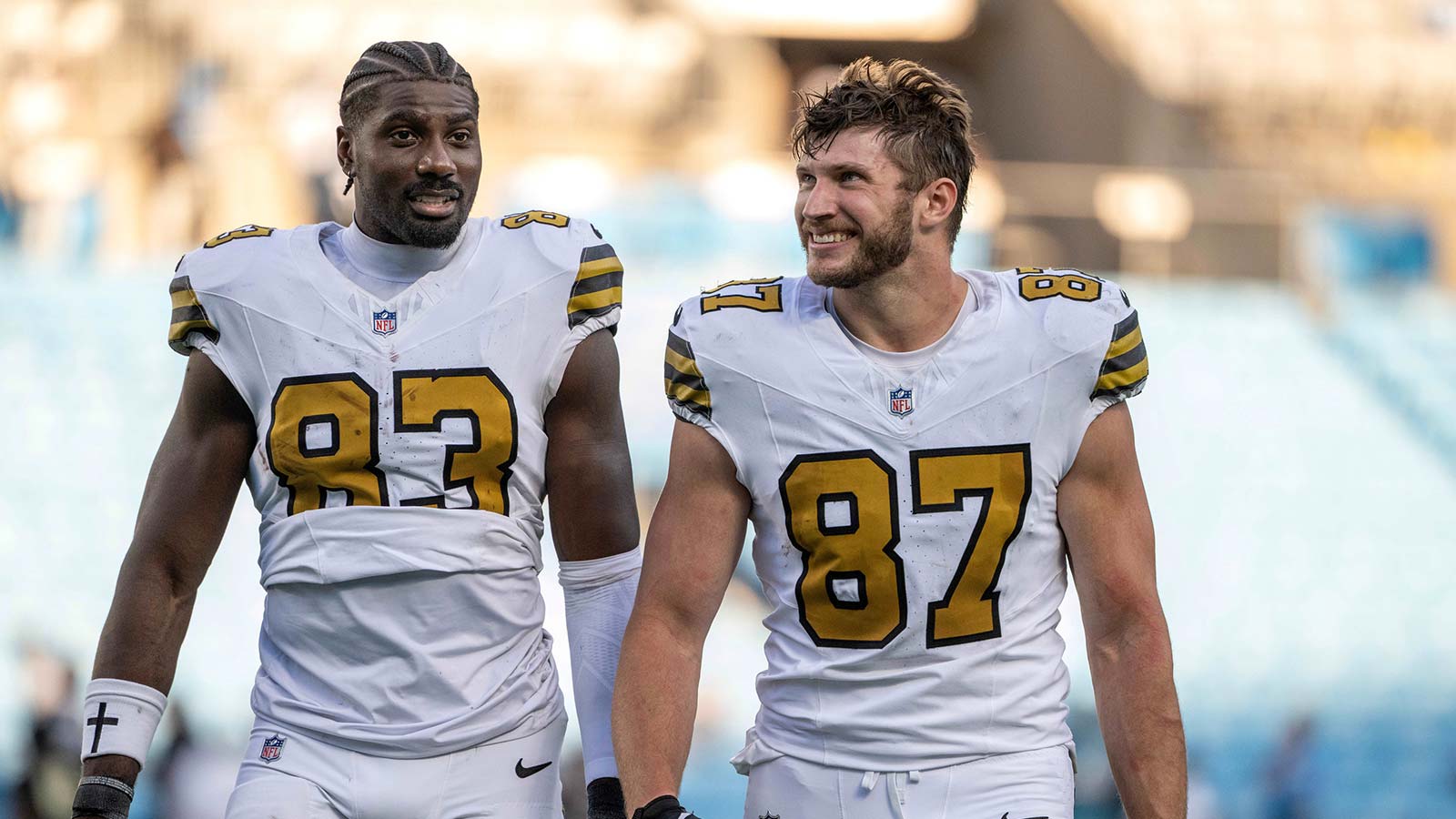
A quarterback significantly influences draft discussions, even if he isn’t the most prominent figure in the room, and this is the situation they finds itself in right now. Tyler Shough is now seen as the young starter the franchise needs to build around, and once that becomes the focal point, the draft board looks quite different. ESPN’s draft overview of the Saints reveals that the team is set to make eight selections, starting with the No. 8 pick. It identifies wide receiver, edge rusher, and cornerback as the three most pressing needs. The article estimates a 40% likelihood of selecting a wide receiver at that first slot, suggesting that Carnell Tate or Makai Lemon could be viable options.
This highlights two important points.
First, the roster has multiple significant pressure points, making a single-player mock draft overly simplistic.
Second, the offense is finally being recognized as an area that the franchise should actively support, other than just a segment they hope to patch up later.
Thus, the more intriguing question regarding this draft class isn’t whether the Saints favor Tate or Lemon, but rather how they will approach the No. 8 pick when the board begins to change, and the classic options are no longer available.
They will not stay at No. 8
Brett Davis-Imagn Images
Nothing about the roster suggests that a one-player draft would be effective, and this is why the idea of trading down is credible, even considering the organization’s history.
The Saints face enough visible needs that moving back would make more sense than assuming that one star-level addition can resolve all their issues, and addressing the receiver position is crucial.
The same goes for the edge and cornerback spots, and also, the options after the first round will be significant.
A team in this situation is generally better off gaining more premium picks rather than selecting the most polished player available and hoping everything else falls into place.
The case for trading down strengthens when considering the likely outcomes of the top seven picks, and if the players taken before the Saints include the most obvious blue-chip prospects, the No. 8 pick becomes less about tier separation and more about preference.
This is precisely the scenario in which a front office should evaluate whether it’s worth paying a top-10 price for a player they could reasonably find later while also recouping additional draft capital.
However, this doesn’t imply that the Saints should make a drastic slide down the board, and a modest move to the low or mid-teens would suffice.
The goal here would be to stay within reach of a receiver or edge player that the staff favors while also creating another opportunity to bolster the secondary before the weekend concludes.
Another element to consider is that the current roster requires more starters, and teams with established cores can justify pursuing singular talent.
In contrast, teams working to stabilize a young quarterback while simultaneously improving their defense typically benefit more from making multiple sound decisions rather than relying on one flashy move.
Shough’s presence amplifies the point that a young quarterback needs a draft that enhances the overall coherence of the roster.
In conclusion, the bold prediction is that the franchise will engage in a strategy it historically shuns because the current draft board and roster conditions now make previous habits difficult to defend.
A receiver is still coming, just not at the eighth pick
Kim Klement Neitzel-Imagn Images
This prediction is what keeps the entire class united, and the importance of adding a receiver is too significant to overlook.
Chris Olave remains the only established high-end receiver on the roster, and the same ESPN draft analysis that gave a 40% chance of selecting a receiver at No. 8 clearly highlights the reasoning: a young quarterback needs to be surrounded by talent, and New Orleans has not acquired a free-agent wideout to address this need.
Carnell Tate and Makai Lemon are both expected to be first-round fits, but it would be a mistake to think this need must be met with the first pick the Saints have.
Trading down can shift the wide receiver discussion beneficially.
It reduces the cost of the pick without eliminating the possibility of leaving the draft with a quality target for the offense, and selecting Tate at No. 8 is easily imagined, but choosing him at No. 13 or 14 while acquiring another valuable pick is even more sensible.
This is why trading down and selecting a receiver are not mutually exclusive ideas; they complement each other.
From a broader football perspective, the reasoning is that the Saints need one who can support the quarterback quickly without requiring a complete overhaul of the offense from the very first minicamp.
A receiver picked a few spots later in the first round can still fulfill that requirement, and what the Saints sacrifice by moving down is often more theoretical than practical.
There is also a financial and roster consideration, because wide receivers often become expensive on their second contracts, which is why it makes sense in principle to draft one early, but cornerback and edge rusher positions can also be challenging to fill without premium resources.
This is what makes trading down more appealing than holding onto a specific pick, as it allows the class to address both types of needs, without forcing one solution and requiring patience for the others.
The next two meaningful draft picks should focus on defense
Matthew Hinton-Imagn Images
The top-three-needs framework from ESPN is particularly helpful, as it clarifies how the league views this roster, and one significant concern is the wide receiver position, but equally pressing are the needs at edge rusher and cornerback.
The defense has lost enough key players that simply drafting a receiver and moving on would leave the team unprepared before the weekend even begins, and with slot cornerback Alontae Taylor gone and Cameron Jordan still a free agent, the roster cannot afford to ignore defensive upgrades in favor of just one offensive addition.
Once a receiver is acquired, the next two picks should definitely focus on the defense, one for the front seven and one for the secondary.
The exact order can vary based on how the draft board unfolds, and if there’s a top edge rusher available, it makes sense to take that player first and then circle back to select a cornerback.
Alternatively, if the cornerback market strengthens, prioritize that position first and wait to grab a front-seven player later, as the key takeaway is that the team should not spend the first two days of the draft acting as if one side of the ball can take a back seat.
A team with a young quarterback often feels pressure from outside sources to focus solely on offense.
This is understandable, but it overlooks the reality of how rosters actually develop, as Shough needs one legitimate target and a stronger defense that doesn’t leave glaring weaknesses.
Because pick eight is high enough to attract trade offers, the team has an opportunity to create this type of balance.
What makes this draft class particularly interesting is that it doesn’t force the Saints to choose between being aggressive and being patient.
Instead, it encourages the front office to combine both strategies, and moving down in the draft is, in its own way, an aggressive move because it challenges traditional habits.
Selecting a first-round receiver afterward still directly benefits the quarterback, as following that with a focus on defense restores balance to the roster.
No part of this plan seems overly complicated, which likely explains why it appears more feasible now than it did a month ago.
The draft board has become clearer, and the needs are easier to identify, and when that happens, a bold prediction becomes less about being daring and more about being practical.
The post Saints’ bold predictions in 2026 NFL Draft appeared first on ClutchPoints.