
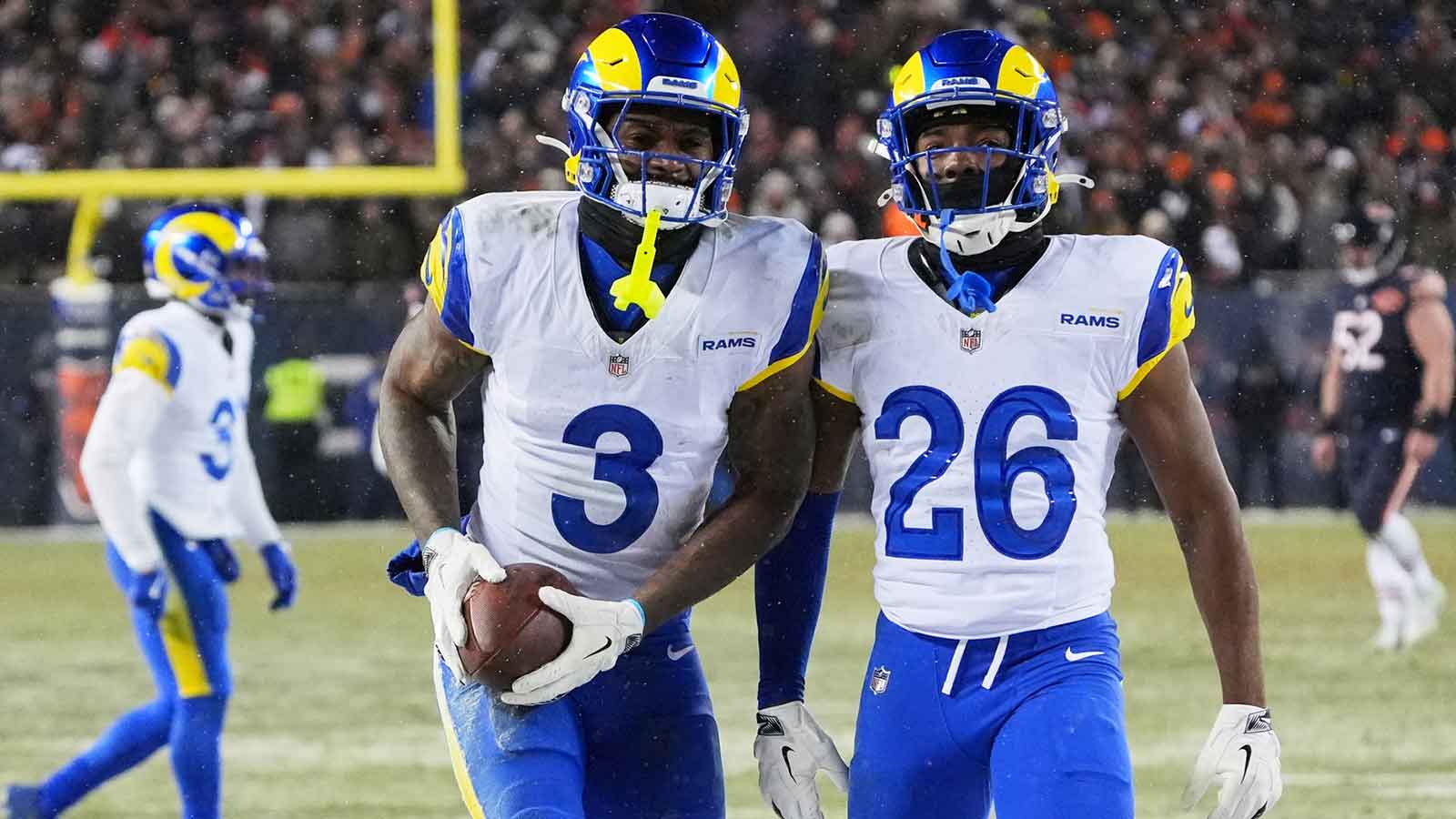
Could Los Angeles stay put and select Makai Lemon with the Falcons’ first-round pick? Absolutely. Les Snead’s response to this possibility was a classic display of draft-season strategy, as he praised the USC wideout without revealing any firm conviction. Meanwhile, Sean McVay has openly expressed interest in Kirk Cousins as a veteran backup to Matthew Stafford, which indicates where the organization stands regarding its quarterback timeline.
One of the premium selections came from Atlanta, while their own first-round pick went to Kansas City as part of the Trent McDuffie trade. This situation leaves the Rams in an unusual position, as they’re aggressive enough to make bold moves, yet stable enough to avoid panic.
Most draft discussions surrounding Los Angeles are converging on the same safe conclusion: stay put, take a receiver, and call it a night. While this is a reasonable and safe approach, it often results in a contender acquiring a good player instead of a franchise-altering one, but they should take a bolder approach.
Snead and McVay should leverage that mid-first-round asset to move up and select a true blue-chip offensive tackle, if the opportunity arises, and this is a daring yet smart move.
For a rebuilding team, that gap may not be significant enough to justify the cost. However, for a roster still aiming to maximize the Stafford-McVay window, it matters immensely.
Trade up for the last blue chip
Matt Marton-Imagn Images
Mid-first-round picks can be misleading.
Fans see the pick number, envision star power, and assume that a franchise is still shopping at the top tier, but the reality is often more complicated.
Once the initial handful of names is off the board, many draft boards tend to flatten quickly, and by the time the draft reaches the early teens, teams are typically choosing between a good starter with one clear limitation and a premium athlete who needs polish.
There’s nothing wrong with any of these options. Still, they represent a very different selection than the one where true cornerstones exist, and this distinction should guide the Rams’ decisions more than any single mock draft projection.
Makai Lemon is an appealing option because he fits the narrative perfectly: a local player with an explosive skill set and a natural offensive imagination, surrounded by a coach who could transform the receiver room into a weekly challenge for defenses.
Ty Simpson makes sense as well, especially considering Matthew Stafford’s uncertain future and the presence of Kirk Cousins as a veteran fallback; he’s not a long-term solution. Both picks would spark conversation and might even appear clever at the time, but neither choice would be as strategic as selecting an offensive tackle.
Premium linemen maintain their value over time, stabilize entire offenses, and make all other investments smoother.
Bringing in a solid long-term tackle would provide Stafford with a safer environment, create more consistent support for the run game, lessen the urgency around backup quarterback discussions, and give Sean McVay the one thing that all great play-callers secretly desire: a little more margin for error. While flashy coaches enjoy having toys, serious coaches value time in the pocket.
That’s where the Rams should focus their thinking.
A move up in the draft would also align with how Les Snead typically operates when he believes the roster is close to contention.
Trading for cornerback Trent McDuffie was not a move for the future, as it was a statement that Los Angeles still aims to compete at a high level. Pairing that veteran addition with an aggressive draft move for a foundational blocker would be a coherent strategy, rather than mere impulsiveness.
Strengthening the secondary with proven talent and protecting the offense with youthful promise would make the entire roster feel more intentionally constructed rather than hastily patched together.
What’s even better, the cost may not be exorbitant if the rise in draft position is measured.
Moving from the early teens into the 8-to-10 range isn’t the same as jumping into quarterback territory at the top of the draft, and a package including Day 3 picks, possibly a future mid-rounder, or a modest additional incentive could facilitate a deal when another team is looking for more volume.
The Rams have been active in the trade market for years, and no front office in the league should be more adept at navigating that landscape than they are.
Another advantageous draft principle also plays in their favor.
Fifth-year options hold the most value at expensive positions, and tackle ranks near the top of that list. If a guard or a complementary receiver develops into a strong player, that’s great, but the financial advantage is not nearly as significant. If the Rams hit on a tackle in the first round, the economic benefits can last for years.
This is crucial for a team that is already paying star players and attempting to keep its championship window open without creating an overly top-heavy roster.
Build the window the right way
Kevin Ng-Imagn Images
Many franchises struggle during transition years because they attempt to address both the present and the future simultaneously. One eye remains on the current season while the other looks anxiously ahead, leading to a divided focus, and they may provide short-term help and consider future insurance while feeling panic over succession plans, resulting in a lack of conviction.
They should avoid falling into this trap.
The interest in Kirk Cousins indicates that the Rams do not need to rely solely on the draft to solve their quarterback issues. Matthew Stafford is still the starting quarterback, and a veteran like Cousins, Jimmy Garoppolo, or another seasoned player can effectively handle the backup role, and this situation does not necessitate forcing a first-round quarterback; in fact, it allows the front office the freedom to use draft picks on sturdier and rarer positions. This logic also pertains to wide receiver considerations.
While selecting a talent like Lemon would be exciting, the issue is that offensive schemes can elevate good receivers to look even better.
However, fewer coaches are capable of compensating for poor protection. Therefore, when a scheme is adept at enhancing skill talent, draft priorities should shift towards positions that need more support, such as tackle, edge, or corner, and unless the wide receiver prospect is truly exceptional, they should not be prioritized over line players for a contender built like the Rams.
Once this principle is applied, the draft strategy becomes much clearer.
There will be no more indecision about the value of Lemon’s polish, no overthinking about quarterback succession, and no pretending that a flashy offensive pick is a necessity. Instead, the Rams can enter the first round with a clear mission: identify the end of the elite trench tier, position themselves to acquire the last one available, and allow the rest of the draft to unfold naturally.
This approach represents a genuine draft strategy rather than mere spectacle.
It’s undeniably unconventional, as fans usually prefer the excitement of selecting the standout name that unexpectedly falls in the draft, and trading up for a lineman does not generate the same immediate thrill. Skill players sell jerseys, and quarterbacks grab headlines, while offensive linemen often go unnoticed. Successful front offices must embrace this difference.
The Rams, in particular, should feel comfortable adopting this mindset. No franchise in the past decade has been more willing to overlook the conventional applause that often accompanies draft night in favor of a more cohesive roster strategy, and while some of these risks may not pan out, many have significantly reshaped the team.
What would set this scenario apart is the style of their aggression, and it’s not about making a splash for the sake of it or taking a desperate gamble on a quarterback timeline that no one seems ready to enforce, but instead, it would involve making a calculated move for the most valuable non-quarterback asset still available.
Another important aspect deserves attention, as top-tier tackles do not just fill one position because they allow other players to settle into more natural roles.
Veterans can stop moving around the line, interior protection improves, running backs find clearer paths, and tight ends can focus more on routes rather than acting as emergency protectors. This ripple effect lightens the entire playbook, which is far more beneficial for a coach like Sean McVay than adding just another receiver or developmental quarterback on the sidelines.
Many teams might be content to sit back and see what falls to them during the draft, but the Rams are not built like the average team, and given their borrowed first-round pick, a veteran star added through a trade, and a coaching staff focused on winning now, the smartest strategy is to actively shape the draft board before others can.
Moving up a few slots to secure the last true cornerstone tackle and transforming a good draft position into a significantly better outcome would be the best choice. More importantly, it would be the right choice.
The post Wild but brilliant move Rams must make in 2026 NFL Draft appeared first on ClutchPoints.
