Trade discussions about A.J. Brown have continued in New England, especially following Mike Vrabel’s ambiguous comments that leave every possibility on the table without offering any guarantees. Stephon Gilmore’s retirement serves as a reminder that much of the old Patriots identity is now relegated to memory rather than reflected in the current roster, and while one narrative focuses on the offense and the other on the past, it’s crucial not to lose sight of the actual draft considerations facing the franchise.
They should stop waiting for a veteran wide receiver and instead forge their own path forward.
The strategic move would be to trade up from the back of the first round to secure a true WR1, and this doesn’t mean merely moving up two spots to seem active or making a desperate jump into the top five, but it requires a significant push into the middle of the round, where the last real “alpha” receivers tend to be drafted.
Of course, acquiring Drake Maye changes the entire landscape, and once a franchise believes it has found its quarterback, the draft strategy can no longer be limited to stacking decent players and hoping one of them develops into something greater.
A young quarterback with a manageable contract creates one of the few opportunities in football where aggressive moves make sense, and this is when a front office should actively seek a premium offensive player who can influence how defenses position themselves even before the play begins.
They have the flexibility to think in this manner, and the Patriots possess 11 draft picks, starting at No. 31 overall, with additional strong selections on Days 2 and 3, including two fourth-round picks and four sixth-round picks.
Their official team draft page also highlights the focus on positions such as wide receiver, offensive line, and edge rusher, along with trade scenarios throughout the pre-draft process, and this indicates that the team is already evaluating various options rather than treating any single position as untouchable.
This is important because they should not view the end of the first round as a throne, but instead, it should be considered a useful tool, and while it is a valuable asset, it is still just a tool.
Go get the receiver
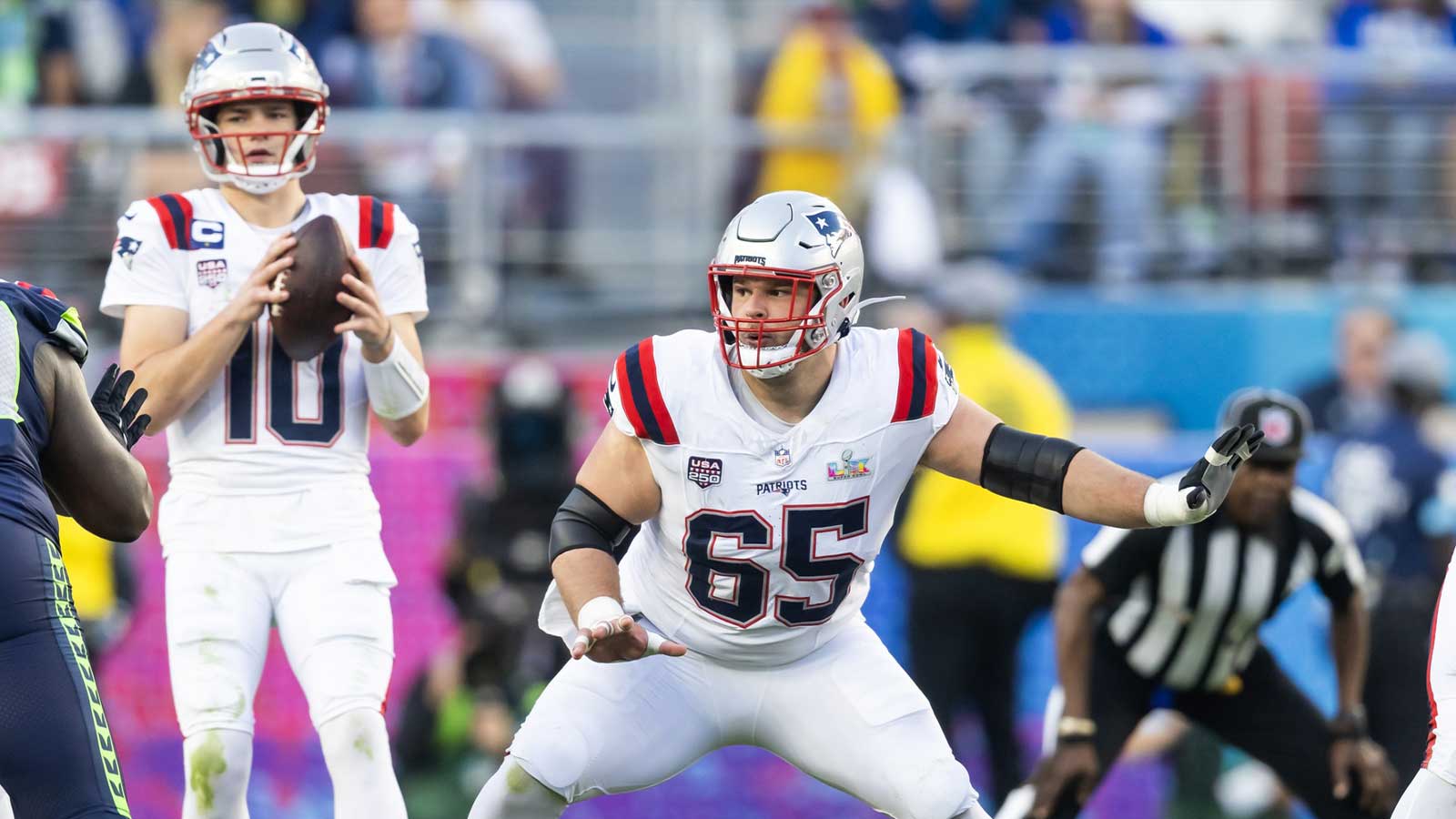
Kyle Terada-Imagn Images
The smartest way to utilize that late first-round asset is not to sit back and let the draft board dictate the Patriots’ decisions, but instead, it’s to pursue the one offensive player who can truly change the game.
Wide receiver is the clearest position for this kind of move, and it’s not that New England lacks players in that position because they have options. However, none of these options addresses the central issue, and while they are helpful, they are not a true top target.
A genuine No. 1 wide receiver does much more than just catch passes as he simplifies reads, widens passing windows, and makes third downs feel less daunting. This allows everyone else on the offense to fit into roles that better match their skills.
Suddenly, the WR2 faces easier matchups, and the slot receiver encounters less traffic, but most importantly, the quarterback isn’t struggling to create everything from scratch.
For a team focused on accelerating Maye’s development, securing a true top receiver is essential and foundational.
This brings us to the key point: waiting can be a significant mistake because once the run on true wide receivers begins, the draft board changes quickly. Teams ahead of New England may convince themselves they need one, while others might panic due to scarcity.
Before long, the Patriots could be left with subpar options that make them regret not acting sooner. So, they must not let this happen, and they should move up in the draft.
This move would not be reckless, and in fact, it aligns perfectly with New England’s draft strategy, as they have eleven total selections.
Eliot Wolf and Mike Vrabel can afford to package some later picks to address one premium need, and a move from the back of the round into the middle range would require a significant investment, but not so much that it decimates their draft capital.
Build the class around Maye
Mark J. Rebilas-Imagn Images
Once the Patriots secure that receiver, the draft becomes much more classic because they won’t have to revisit the receiver position out of desperation, nor will they have to convince themselves that mid-tier options will turn into stars just because the offense needs one.
The focus will shift away from waiting on a potential veteran trade that might not happen, and instead, the rest of the draft class can revolve around this centerpiece, which is how a successful draft should operate.
This approach leads to a much more disciplined draft weekend because they can then prioritize edge rushers, build depth on the offensive line without panic, and add secondary help later if value presents itself. They can also evaluate tight ends or running backs without urgency, knowing they already have a key offensive player on board, and good draft rooms thrive on this clarity, allowing every subsequent choice to be made with a clearer focus.
Compare this to a passive approach for the weekend: New England waits, the top receivers are off the board, and maybe they will draft an edge rusher or a lineman.
Perhaps they’ll choose to remain patient, hoping to find a capable receiver in the second or third round, and while that is possible, relying on this scenario demands too many things to go perfectly. It expects development to accelerate beyond the norm, the quarterback to uplift an incomplete receiving corps, and the coaching staff to instill a sense of urgency where only competence exists.
A more aggressive move for a receiver aligns better with the team’s current timeline, and coach Vrabel wasn’t brought in to oversee a gradual decline.
Maye is at a point where New England shouldn’t be hoarding potential options while avoiding decisive action, and at some point, a team must acknowledge that its offense requires a focal point and behave as if it believes its quarterback is worth building around.
That time is now and should be now.
Furthermore, a first-round contract for a wide receiver can be a tremendous value if the player lives up to expectations, especially in a league where high-end pass catchers continually reset the market.
The Patriots shouldn’t wait for a costly veteran when they can secure a promising player and develop him alongside Maye, and this is the kind of financial strategy that smart teams use to create longer windows of opportunity, rather than just chasing headlines, but of course, there will be objections.
Some will argue that the offensive line deserves priority, which is a valid concern, though help for the line can often be found in various rounds of the draft.
Others might claim that the defense requires more talent, which is also a fair point, especially regarding edge rushers, but still, some will suggest that they should simply draft the best player available and let the board dictate their choices, and while this is a common phrase, “best player available” can often serve as an excuse for indecision.
For the Patriots, what matters most is that they need to help their quarterback by providing him with the kind of target that every successful offense requires, yet very few offenses can improvise effectively.
Fans at the end of Round 1 often adopt a modest mindset, take what’s available, and trust the draft board. Sometimes, this is wise, but most of the time, it is simply fear disguised as discipline. They possess enough draft picks to do more than wait and enough reasons to take action.
So, stop waiting for another franchise to solve the receiver dilemma through a trade, and stop expecting the draft board to conveniently deliver a WR1 at the end of the first round.
The post Wild but brilliant move Patriots must make in 2026 NFL Draft appeared first on ClutchPoints.
