The Utah Jazz are not operating in ambiguity. They are operating in arithmetic.
When Utah announced that Jaren Jackson Jr. will undergo surgery to remove a localized pigmented villonodular synovitis (PVNS) growth in his left knee, the basketball implications extended beyond health updates. The procedure, identified during a post-trade MRI, is expected to result in a full recovery. But its timing underscores a broader reality: the Jazz are incentivized to lose now in order to win later.
The surgery does not create that incentive. It simply fits within it.
Jackson, 26, is averaging 19.4 points on 47.6% shooting with 5.7 rebounds, 2.0 assists and 1.4 blocks in 48 starts this season. A former Defensive Player of the Year and two-time All-Star, he represents long-term stability in Utah’s frontcourt. His contract provides control through 2028-29 with a player option the following season, aligning with the organization’s multi-year competitive window.
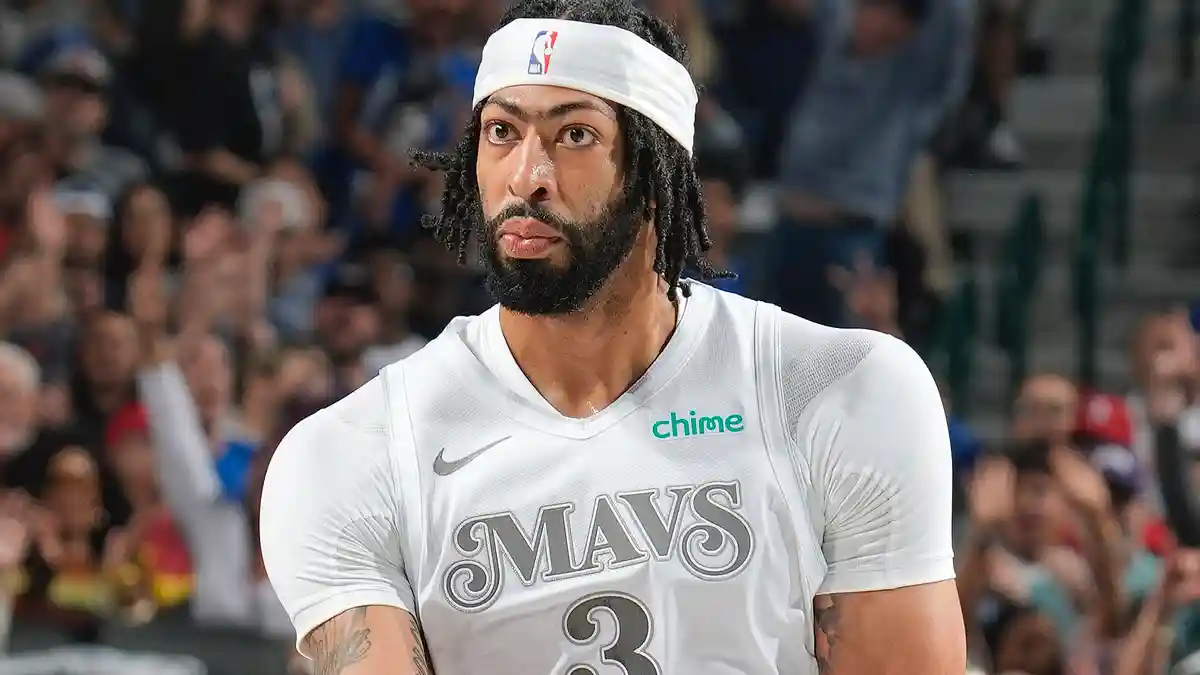
Photo by Rich Storry/Getty Images
Top-Eight Protection Driving Everything for Utah Jazz
Utah’s 2026 first-round pick is owed to the Oklahoma City Thunder, but it is top-eight protected. That clause is the fulcrum of the Jazz’s strategic posture.
If Utah finishes in the No. 1 through No. 8 lottery range, it keeps the pick. If the selection falls at No. 9 or later, it conveys to Oklahoma City. In practical terms, flirting with the play-in tournament offers little reward and significant risk. A marginal improvement in the standings could cost Utah a premium draft asset in what is widely viewed as a loaded 2026 class.
That protection creates a narrow target. The Jazz do not merely need to be bad. They need to remain firmly within the bottom tier of the league.
For a franchise balancing competitive credibility with asset maximization, that math matters more than optics.
From Preseason Messaging To Midseason Reality
Before the season, Jazz leadership publicly downplayed the idea of overt tanking. In local interviews, front-office executives emphasized the organization would not manipulate minutes strictly for lottery positioning. The message centered on development, culture and maintaining competitive integrity.
As the season unfolded, the reality shifted.
Utah has repeatedly started its most recognizable players, including Jackson and Lauri Markkanen, only to limit their fourth-quarter exposure in tight games. In multiple contests following Jackson’s arrival, he logged approximately 25 minutes through three quarters and did not appear in the final period, even in single-possession situations.
The approach complies with the NBA’s Player Participation Policy. The league can fine teams for sitting healthy stars outright. It cannot dictate in-game rotation decisions. Utah has remained within the letter of the rules while subtly controlling outcomes.
The strategy has drawn national attention, with some league observers describing it as a deliberate effort to avoid the middle. From Utah’s perspective, the alternative is worse: winning just enough to lose its pick.
The Jaren Jackson Jr. Trade As A Dual-Timeline Move
The acquisition of Jackson signaled that Utah’s rebuild is not an endless teardown. The Jazz parted with multiple young players and three future first-round picks to secure a 26-year-old All-Star entering his prime. The move positioned the organization to pivot toward contention once its draft obligations are resolved.
Pairing Jackson with Markkanen, Walker Kessler and Keyonte George outlines a competitive nucleus capable of scaling quickly.
Yet the trade also fits within a “hedge while tanking” model that several league executives have increasingly acknowledged. Utah could secure a foundational piece early, absorb short-term losses during a non-contending season, and still preserve flexibility to add one more elite prospect in 2026.
Jaren Jackson Jr. is the only player in NBA history to score 20+ points in each of his first three games with an NBA team while also playing no more than 26 minutes in any of those games. pic.twitter.com/KU4YEodTk8
— OptaSTATS (@OptaSTATS) February 12, 2026
In that framework, Jackson’s surgery does not derail a playoff push. It clarifies that there is no playoff push to derail.
Why 2026 Is The Cleanest Window for the Utah Jazz
Utah’s timeline further explains the aggression.
The franchise has cycled through multiple phases since moving on from its previous core, briefly outperforming expectations before recalibrating. Internal and external evaluations of the draft landscape suggest 2026 offers significantly more top-end talent than 2027. That disparity places additional pressure on this season to serve as the final major lottery swing.
If Utah secures a top-eight pick in 2026, it keeps its selection and exits its obligation to Oklahoma City. That clears the books for a pivot into contention in 2026-27, armed with a young core plus one more premium addition.
If the Jazz fall outside the top eight, the pick conveys, and the opportunity to add a high-ceiling prospect vanishes.
The risk-reward equation is stark.
The Optics Versus the Incentives
Tanking remains a polarizing topic. Fans pay full price for tickets regardless of strategic recalibration. The league publicly discourages overt loss-chasing while maintaining a draft system that rewards poor records.
Utah’s approach illustrates that tension.
The Jazz are not sitting healthy stars without explanation. They are not violating participation guidelines. They are deploying players for three quarters, managing minutes, and leaning into developmental rotations late. With Jackson now sidelined for surgery, the path toward maintaining a bottom-eight record becomes more organic.
The question is not whether Utah is pushing boundaries. It is why.
The answer lies in the protection clause, the draft strength, and the franchise’s sequencing. The Jazz are not tanking for abstract upside. They are tanking because the structure of their obligations makes mediocrity the most damaging outcome.
In a league defined by asset management as much as shot-making, Utah’s strategy may be uncomfortable. It is also rational.
On the other hand, it’s irrational to think the league’s fans will indefinitely support the product some teams put on the floor, considering the incentive to lose that currently exists within the league’s rules.
The post Utah Jazz: Pushing Tanking Boundaries With Jaren Jackson Jr.’s Surgery appeared first on Ballislife.com.