
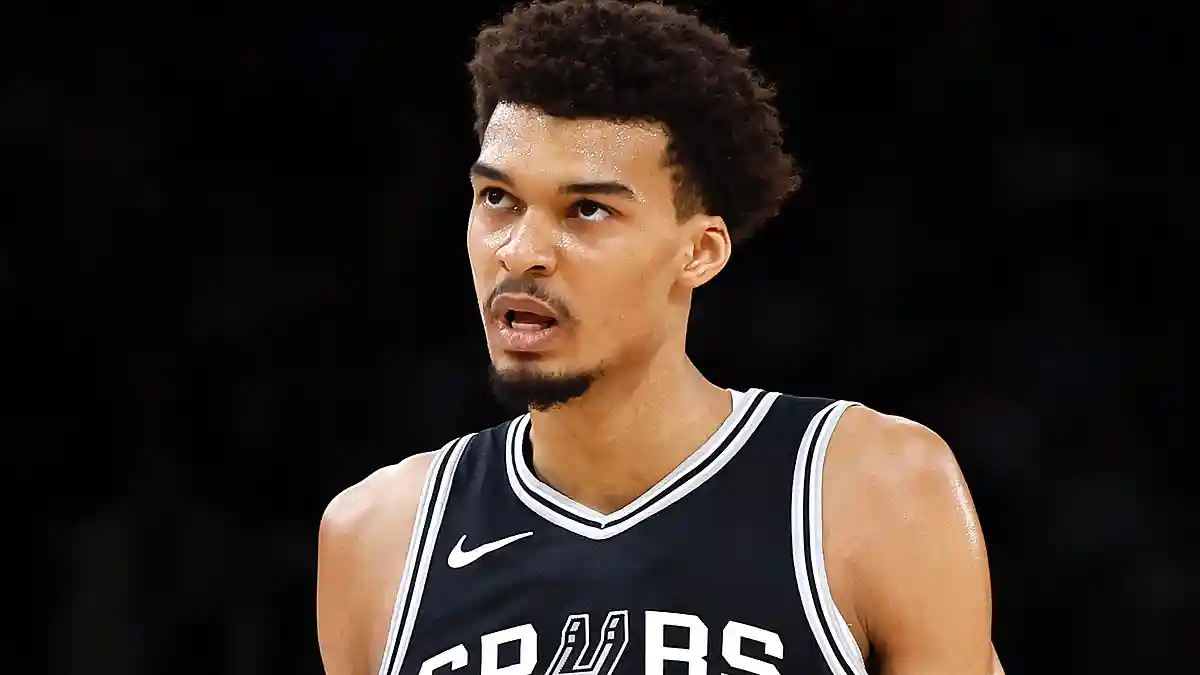
Denver Nuggets superstar Nikola Jokić is averaging 28.8 points, 12.5 rebounds, and 10.5 assists per game. Victor Wembanyama is putting up 24.0 points, 11.2 rebounds, and nearly three blocks a night while anchoring a San Antonio Spurs team playing at a 59-win pace.
Both entered the season as obvious award contenders. Now, both sit one bad week away from being ineligible for every major NBA award.
That is the reality of the 2025–26 season, a year when a stat line can matter less than a medical report. The league’s 65-game eligibility rule, introduced to address load management and reward regular-season participation, has quietly become the primary variable in this year’s awards race.
The rule’s logic was understandable: if you want credit for a season, you should play most of it. However, the rule does not ask why games were missed. It just counts them. And when the math starts dictating outcomes more than performance, the conversation shifts.
The better solution is not scrapping the rule. It is trusting the voters.
The MVP Race and Who’s Still Standing
Shai Gilgeous-Alexander leads the MVP race, and not many people are arguing with that. He is averaging 31.8 points, 4.4 rebounds and 6.4 assists while steering Oklahoma City to a 45–15 record and the best point differential in the league. He has appeared in 49 games. He has breathing room, though it is not unlimited.
Number of games these players can miss before they are ineligible for MVP due to the 65-Game Rule:
SGA – 8 games
Jokic – 1 game
Cunningham – 11 games
Wembanyama – 3 games
Luka – 5 games pic.twitter.com/qsJk358Fk2
— ESPN BET (@ESPNBET) February 24, 2026
Behind him, Jokić is delivering another triple-double season while orchestrating everything Denver does offensively. The production is historic. The impact is obvious. But 42 appearances and 16 missed games leave almost no margin. Two more absences, injury, illness or simple bad timing, and he is removed from consideration entirely. Not because voters reassessed his value. Because a threshold was crossed.
Cade Cunningham and Jaylen Brown have benefited from that tension. Cunningham has transformed Detroit into the top seed in the East while averaging 25.4 points, 4.8 rebounds and 9.8 assists. Brown has carried Boston through a season without Jayson Tatum, producing 29.2 points and 7.0 rebounds while keeping the Celtics near the top of the standings. Both have played 51 games and sit comfortably above the line.
Luka Dončić remains in the mix in Los Angeles, producing at an elite level when available. But his missed games have shifted part of the conversation from dominance to durability.
The MVP race is no longer just about who has been best. It is about who remains eligible.
Why Voter Judgment Still Matters
Availability should matter. Partial seasons rarely deserve full-season awards. But there is a difference between managing rest and suffering a legitimate injury. The current rule does not account for that distinction.
Voters can.
The writers and analysts who cast ballots follow this league every night. They understand context. If someone believes 42 games is insufficient for MVP consideration, that judgment belongs on a ballot. If another believes dominance outweighs missed time, that belongs there too.
That is how awards are supposed to work.
Instead, discretion has been replaced by arithmetic. Historically, voters were already hesitant to reward players who missed significant stretches. The 65-game mandate formalizes something that was largely self-policed, but it also removes flexibility in cases where nuance matters most.
Keeping 65 games as a benchmark makes sense. Treating it as an immovable wall is where the tension begins.
Draymond Green criticizing the NBA’s 65-game rule: “I once lost a DPOY award to Kawhi Leonard and I think he played 51 games.”
(Via @TheVolumeSports) pic.twitter.com/Sy2MgNYpAZ
— Ballislife.com (@Ballislife) January 31, 2024
When All-NBA Becomes Financial Leverage
The consequences extend well beyond the MVP race. All-NBA selections trigger supermax escalators, which means eligibility goes beyond recognition and directly impacts earnings.
Detroit’s Jalen Duren is one example. He declined an extension and could vault into the higher max tier with an All-NBA nod. Staying above the games-played threshold could reshape his financial trajectory by tens of millions of dollars over the life of his next contract.
Elsewhere, players like Kevin Durant, James Harden, LaMelo Ball, Deni Avdija and Jalen Johnson, among others, have positioned themselves well simply by remaining available while other candidates hover near the cutoff. They are not the only names in play, but they illustrate how the field reshapes itself when higher-profile contenders fall below the line. In a healthier season, the ballot might look very different.
For some players, the difference between 64 and 65 games is not symbolic. It is generational money.
The Health Risks Beneath the Threshold
There is another layer to this conversation. It has less to do with trophies than with health.
Tyrese Haliburton addressed it directly. On JJ Redick’s podcast, The Old Man & The Three, he admitted that the financial incentives tied to All-NBA recognition influenced his decision to return from a hamstring injury sooner than he otherwise would have. When asked whether the $53 million escalator in his contract factored into that urgency, he acknowledged that it did. Without the 65-game requirement, he said, he might have waited longer to be fully healthy.
Tyrese Haliburton on the league’s new 65 game threshold for end of season awards. Full YouTube segment link below. Full episode out tomorrow. pic.twitter.com/PUxbQtAah0
— JJ Redick (@jj_redick) February 14, 2024
Under the structure of his deal, an All-NBA selection would elevate his extension from roughly 25 percent of the cap to 30 percent, a swing of about $53 million. Reaching the threshold was part of that path. Falling short would eliminate it.
Haliburton later called the rule “a stupid rule,” while also recognizing the professional reality that players feel compelled to meet it if they can. His concern was clear: tying major financial incentives to a participation number can push players toward returning before they are fully ready.
When tens of millions hinge on availability, the calculation changes fast. A mild strain becomes a calendar issue. A lingering injury becomes a math problem.
The league sought to reduce load management. What it may have done instead is introduce a different kind of risk.
A Defensive Race That Can Reset Overnight
Last season, Wembanyama was the heavy favorite for Defensive Player of the Year before a deep vein thrombosis diagnosis ended his campaign. The eligibility threshold offered little flexibility, and a race that had a runaway leader in February suddenly became wide open.
Catherine Steenkeste/NBAE via Getty Images
It wasn’t just a trophy he lost. Falling short of eligibility also removed one pathway toward Rose Rule criteria, which can significantly increase the value of a rookie max extension. A blood clot cost him an award and, potentially, a significant chunk of his next contract.
Now he is back and once again the most disruptive defensive force in the league. He has played 44 games. He is one extended absence away from last year happening again — not because he did anything wrong, not because he chose to sit, but because that is how the rule works. Wembanyama knows that better than anyone.
The Cost of Turning Awards Into Arithmetic
The 65-game threshold grew out of legitimate frustration. Fans paid premium prices only to see stars sit. National broadcasts lost some of their shine. Load management became shorthand for disengagement. The league had a valid concern.
But holding players accountable for rest should not mean punishing them for getting hurt. Jokić did not choose a hyperextended knee. Wembanyama did not choose a medical diagnosis.
Voters understand that difference. Let them use it.
Editor’s Pick
The post NBA’s 65-Game Rule is Turning the MVP Race Into a Math Problem appeared first on Ballislife.com.