Hall-of-Famer Chamique Holdsclaw spoke with BIL about succeeding at the early levels of the WNBA and her new endeavors
Do not cite the deep magic of the WNBA to Chamique Holdsclaw … she was there when it was written.
Holdsclaw stands as one of the WNBA’s first major superstars, breaking out as the third No. 1 pick of the then-fledgling league’s rookie drafts. The Tennessee alumna and three-time collegiate national champion would spend 11 seasons in the league, leading it in scoring once and rebounding twice while also earning six All-Star nominations and an Olympic gold medal with the United States women’s national basketball team.
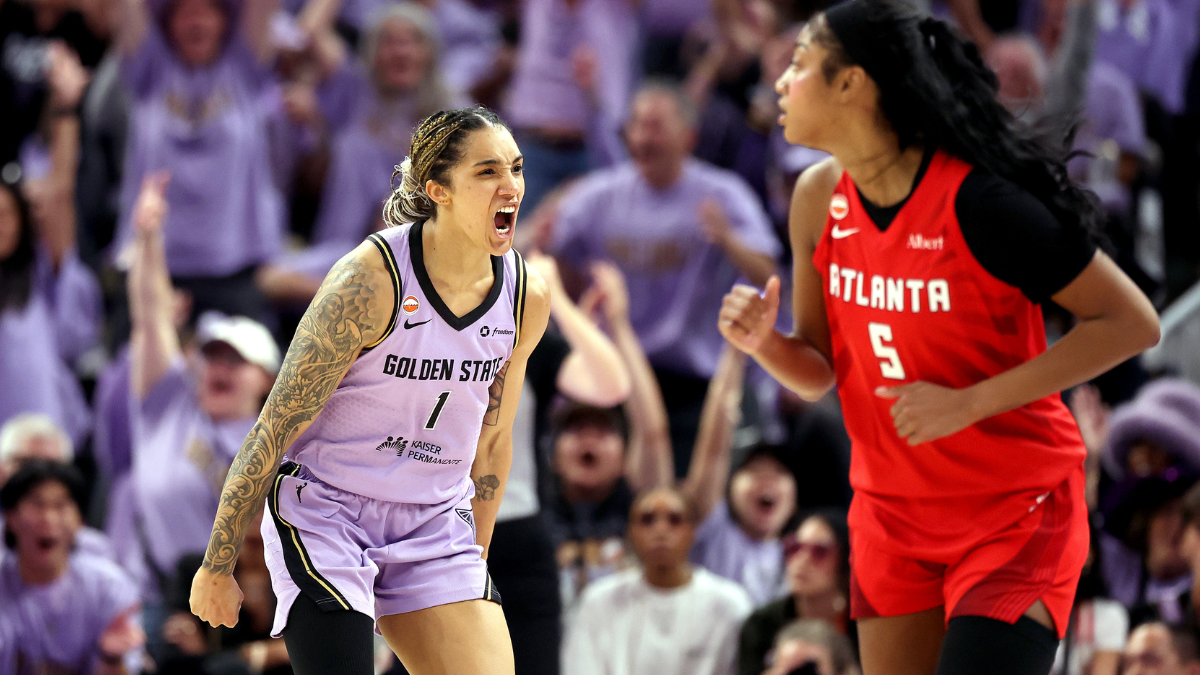
Though it’s far removed from her accomplished playing days, 2026 has been an equally decorated year for Holdsclaw: she was recently inducted into the Naismith Memorial Basketball Hall of Fame and has been one of the most prominent talents in USA Sports‘ maiden voyage with league coverage. That journey continues on Thursday afternoon when the WNBA Finals Game 6 between the Golden State Valkyries and Atlanta Dream (a former Holdsclaw employer) is staged at State Farm Arena (12:30 p.m. ET, USA/E!/Syfy/Peacock).
Prior to the postseason and her induction, BIL had the privilege of speaking with Holdsclaw while she regaled young proteges at a clinic hosted by USA Sports at Madison Square Navy Yard in her native New York City. Holdsclaw spoke about her accomplished career and the privilges and responsibilities of narrating and analyzing the league’s biggest games on a new network …
Photo: Doug Pensinger, Getty Images
As someone who has been around since some of the early years, where would you say the league has grown the most?
CH: I would say definitely the exposure. Now it’s a whole conversation piece. Usually, people stop me and stuff, that’s pretty normal because I’m a tall woman. But now it’s at like stage ten! People are like, “Hey, who are you? and I was like, “A person?’ They go ‘I just know you’re a basketball player!’ So it’s cool. It’s a level of excitement.
That’s what you want to see. I think these young ladies definitely deserve it. You had the pioneers like the Nancy Lieberman and Ann Meyers, then it was Lisa Leslie and my generation coming in. Now the reward has to come sooner or later. This is great, now that these young ladies fought for themselves during the CBA negotiations and walked away with with game changing adjustments across the board, not just financially, but also for accommodations if they want to have children, surrogacy. I feel like the league now looks at these women as total beings. So it’s a really exciting time.
What sort of foreshadowing did you notice that hinted that the WNBA was going to reach the level it’s currently stationed?
CH: I was thinking just the fan support. We had really loyal fans and people that really like grew with us. Now, those people, I see them still supporting. We get a little bit older and stuff, but those were the people that were there day one, when it wasn’t a popular thing to do.
I know a lot of people were drawn towards towards the WNBA early on because it was a sport that was affordable for families. It allowed more accessibility than the NBA games and similar stuff, so they can really like connect with the fans and get closer. I feel like it’s still that way, to a degree.
It’s exciting because I had friends that went to All-Star Weekend, and they say, oh, we’re everyday people that work jobs, whatever, we’re not celebrities by any means, right? That’s what they told me/ But they walked away with pictures with Paige [Bueckers], A’ja [Wilson], all the girls, and they were like just loving it. I just love that it’s still accessible, that the women understand that we have to pour into our fans also. I love that.
Is there a current WNBA that reminds you of your skillset?
CH: A lot of people will say Napheesa Collier, but I don’t really see it. I see the mid-range movements, but I was a person that had guard ability, so I’m dribbling down the court, shakin’ and bakin’. She doesn’t really do that. I can see the smoothness and the flow, but I don’t know.
Where were you when you got the Hall of Fame call and what was your initial reaction?
CH: I was at home and it just immediately put me in a place of being in Astoria Houses on the basketball court. My second thought was just all the people that poured into me and have supported me. I knew that they were going to be excited about the news.
It took me back to being a young kid when I used to carry my basketball everywhere.
Who were some of the people that helped you the most on this Hall of Fame journey?
CH: Definitely just my family as a whole. I remember the support, whether it was a cousin, an uncle giving me a ride to practice, buying me shorts and stuff. My grandmother raised me, she was a little older. It was a lot of family. It was a village getting me to where I needed to be with practice and things.
Then we go to high school, you start traveling a little bit more. I had all the parents of teammates that told my grandmother that they would make sure that I was okay, as they were the chaperones on our trip. These are people who invited me into their homes. So many people have supported me along this journey and it never stops. Growing up, I I often think of the people at the beginning, in the middle, and the people that are here now that are still just supporting me, want to see me be successful in life. I think about those people because I wouldn’t be standing here today without them.
Where do you think you’ve made those people the proudest?
CH: Just seeing this version of me. Life isn’t easy. It has its ups and downs, and I’ve had like setbacks or whatever. But the thing that I built into my inner being, and I think sports has played a role in that, is this level of resiliency that I have. I really had to like go internal and just figure out like who I was because it was something I was dealing with, my mental health and dealing with a mental health diagnosis like bipolarity, the anxiety…That all, at times, can become a lot and I had to really just trust on getting the help and support that I need.
I’ve been very outspoken about this, just sharing and telling people that these were moments in my life I didn’t recognize myself. The woman I am now is just really helping people get support in whatever area that they need. I was that kid dealing with a lot, whether it’s stuff going on at home, whether it’s like a woman growing into her body, we need to have those discussions with young people because the world is ever evolving. They say a woman and man who can control their emotions and has that emotional maturity is somebody that can capture the world, that’s a big thing. I start to see people in life, just those that have like emotional control and those that don’t, you know.
I realized that I want to be the person that can control their emotions, not be quick to anger, be able to process things. I think a lot of that I learned from my grandmother as I got older before she left us. [Tennessee coach] Pat Summit, she always told me to process things before you speak, really thing about. So that has really helped me.
Who I am now, I want to be just offering kindness and bringing love into every room that I am in. That’s my number one thing. I don’t want [people] to just see me, I want them to feel me and my presence. I want them to walk away with something because there’s women in my life that have like tapped me on the shoulder when I least expect it and poured into me.
I ran into [fellow broadcaster and Olympian] Summer Sanders the other day. We were at an event. I had not seen Summer in over 20 years, She said a whole lot of special words. Just the words that she told me and how she felt about me and who I was, man, I was just taken back. I needed that, so I want to be that person to others.
What do you want your ultimate legacy to be on and off the floor?
CH: Basketball allowed me the opportunity to see the world, to really change the outcome in my life and things like that, and I’m just forever grateful. But that’s such a small scope of my life. You’ve still got to be a human person and want to still be a person that contributes to society. So I have to share my experiences with these young people in a way that I feel comfortable.
It may not be out there [on the court] because I got a new knee. It’s not out there right now running on the court. I’m not running on the court, but it’s also like just pouring life into them. When I speak to them, it’s just about being the best that I can be.
As some one who has been involved in the W for literal decades, almost from the start, how does this league prevent itself from getting too big too quickly?
CH: We have some time before the next negotiation, right? Just enjoy this part, that’s what I’m saying.
Things aren’t going to change. We know, right now, the players are in a happy place, right? We’ve got to continue put people in the stands and we got to continue getting that support, allowing these women to advertise. When I say advertising sells, it’s like we’re seeing this explosion because of social media. We’re seeing how dynamic these women are in the boardroom, with the fashion, being able to market all these different things and products.
So that’s exciting, and we got to just continue to support them. I feel like these women are educated, they’re amazing, so we have to be giving the opportunity to show who they are and we’ll all continue to win.
“If you want to stop her, ladies, put a body- keep a body on her, they don’t.” Chamique Holdsclaw on stopping Angel Reese in the paint and the superstardom of Allisha Gray https://t.co/WvjSQTmE6b
— USA Sports (@usasports) July 30, 2026
Speaking as an alum and now involved behind the scenes of the game, how does the league keep the stands filled?
CH: If I knew all those answers, my guy, they’ll be hiring me for the league (laughs).
I think just continuing to do the outreach, touching communities, touching people, being accessible, that is key. Standing up for everybody, it’s a mutual respect. Stand for what you believe in. Show each other respect. We’ve never been a league to shy away from hard topics and issues, and I think that’s what a lot of people respect about us.
Just continue like building boldly. Don’t feel the constraints of the outside world say what we have to be. A lot of times the outside world might not have thought that this was going to happen with these contracts and things of that sort. But when you come together, create the sisterhood, work hard with so many dynamic women, that’s what we’re going to get. Keep allowing them to show up in their authentic selves. You’re not going be able to refuse it. Think about that. Like you’re not. I mean, you’re learning.
I was watching a new documentary the other day about Napheesa, DeWanna Bonner, A’ja, and just their journeys and their family stuff. That wasn’t something that we didn’t see back when I was playing because we didn’t have the cameras coming in and showing our lives and stuff. I’m sitting there learning new things. I was so excited to learn about Bonner and see her family and kids again. It opens, it puts more eyes on to the intimate, personal lives, and that’s what people want. They want to be inside your house.
It was the strangest thing back then when I was young because the cameras always wanting to like come in and stuff, and we were like, “Oh my God!’ But now they welcome the cameras. I was a young kid, like, “Oh man, I got to do this,’ and now the’yre like, “Hey, let me show the outfit, let me do the tunnel walk. Let me let me show who I am. I love it.”
You had some exposure to that when HBO did a documentary about your Tennessee teams. What was that like for you as a teenager, a young 20-year-old, to have that kind of pressure and exposure, especially as a face for a niche sport like women’s basketball, at the time?
CH: It was exciting to say that you accomplished a lot of firsts, It was it was a great time, but still, we still had our struggles. Every arena wasn’t getting a good substantial amount of fans. We had teams folding and things of that sort. But still, we believed in the product, we believed in each other, and some of my best memories are on teams where it might not have always been the best as far as facilities and stuff, but we had the sisterhood, like we worked hard and we had fun.
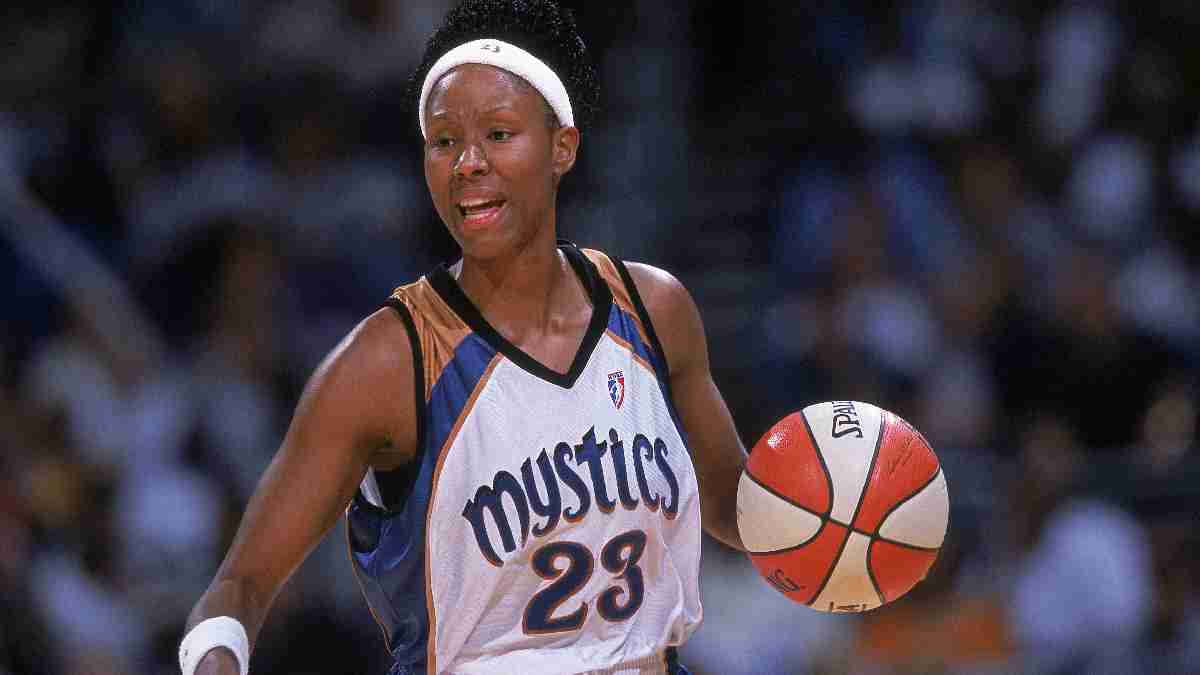
My time with the Mystics was lit. We had a great owner, rest in peace to Abe Pollin. He just believed in the community. He did give away a lot of tickets and made it accessible to get people in there to pack it out. So it was a great time.
Considering your work in mental health wellness and awareness, how proud are you of the developments in the area over the last few years?
CH: I’m really proud of how this has grown. It takes brave individuals. I [spoke out] at a time where people were like, ‘What the hell, why do you want to share something so intimate about yourself?’ What I was able to do was to get these conversations, with my platform and major publications, get the ball rolling.
To see these athletes now, it’s been almost 20 years later, really to stand up for themselves, say I need to take a break [is inspiring]. We’ve seen it with Naomi Osaka. We’ve seen Kevin Love speak about it, DeMar DeRozan, Simone Biles, athletes at their best, playing at their pinnacles, saying, “Hey, I need a timeout. Something’s not right.’
So it makes me feel like super wet, warm, and fuzzy because the media exposure has increased. You have like a lot of young people with these devices, the phones. They’re reading stuff about their famous entertainers, actors, and so it warms my heart when I have a young person that I’m talking to tell me that they’re attaching to these stories, It’s important for people that experience these things to share, especially if they have a platform, because it kicks down stigmas.”
Are there resources in today’s locker rooms that you could have benefitted from in your own playing career?
CH: Just the open conversation about it. When I spoke about that. It was like I was like an enigma and a problem because I’m like I need help. Now an athlete can say that and they’re going to run and get them the resources immediately.
[Back then], it was like oh my gosh, she’s crazy and things like that, which was kind of hurtful at the time. But again, I believed in something. I believe something needed to change, and I’m happy that I played a small part in that.”
“Fiebich, this is a lesson. If you’re gonna talk the talk, you gotta walk the walk. You went out with a big donut. You can’t do that!” Fiebich essentially guaranteed a win in a back-and-forth with Angel Reese Chamique Holdsclaw gives a hooper’s perspective on the banter https://t.co/rpcCB8GIXn
— USA Sports (@usasports) September 24, 2026
What sort of responsibilities come with working with an organization like USA Sports, which has entered into WNBA broadcasting at the height of the league’s popularity?
CH: It’s so much fun! I’m really enjoying this. I’m a student and I’m learning. I’m a type of person where you have to like give me feedback and everybody’s saying oh, you’re doing great. It’s great. Everybody’s like my other teammates, that’s what we call each other on here.
The thing is that I’m learning. I know basketball and I think that part of it is just everybody you work with is figuring out flow, just being respectful, not to mess with the timing, not to talk over other people and things. That’s not really like my personality anyway. I’m figuring out my own flow and just watching these players so I’m able to analyze it and able to make sure I give them due justice.
Recently, I got really kind of fired up because I’m mad watching a game because I’m like they do not keep a body on Angel Reese! I feel like I’m playing this thing with her. Sometimes I’m like in a studio, oh my God, like yelling at the touch! Yeah. But then it’s like, all right, now I got to say this in a good way, where I’m a little calm. But I’m enjoying it.
When transitioning from a high-level player to a studio analyst, what’s the aspect of the job where you had to improve the most?
CH: I’m a pretty chill person, and so I had like this requires me to talk even more! It’s just about really learning that can take up space, right? Learning something new once you learn who you’re up there with, and like being able to just articulate your points. Just talk a little longer. I’m not like a long-winded person, but sometimes in explaining yourself, be okay with that. Just talk as long as you need. So that’s been a great thing.
Geoff Magliocchetti is on X @GeoffJMags
The post EXCLUSIVE: WNBA Legend Chamique Holdsclaw Talks Career, Legacy, and More appeared first on Ballislife.com.