
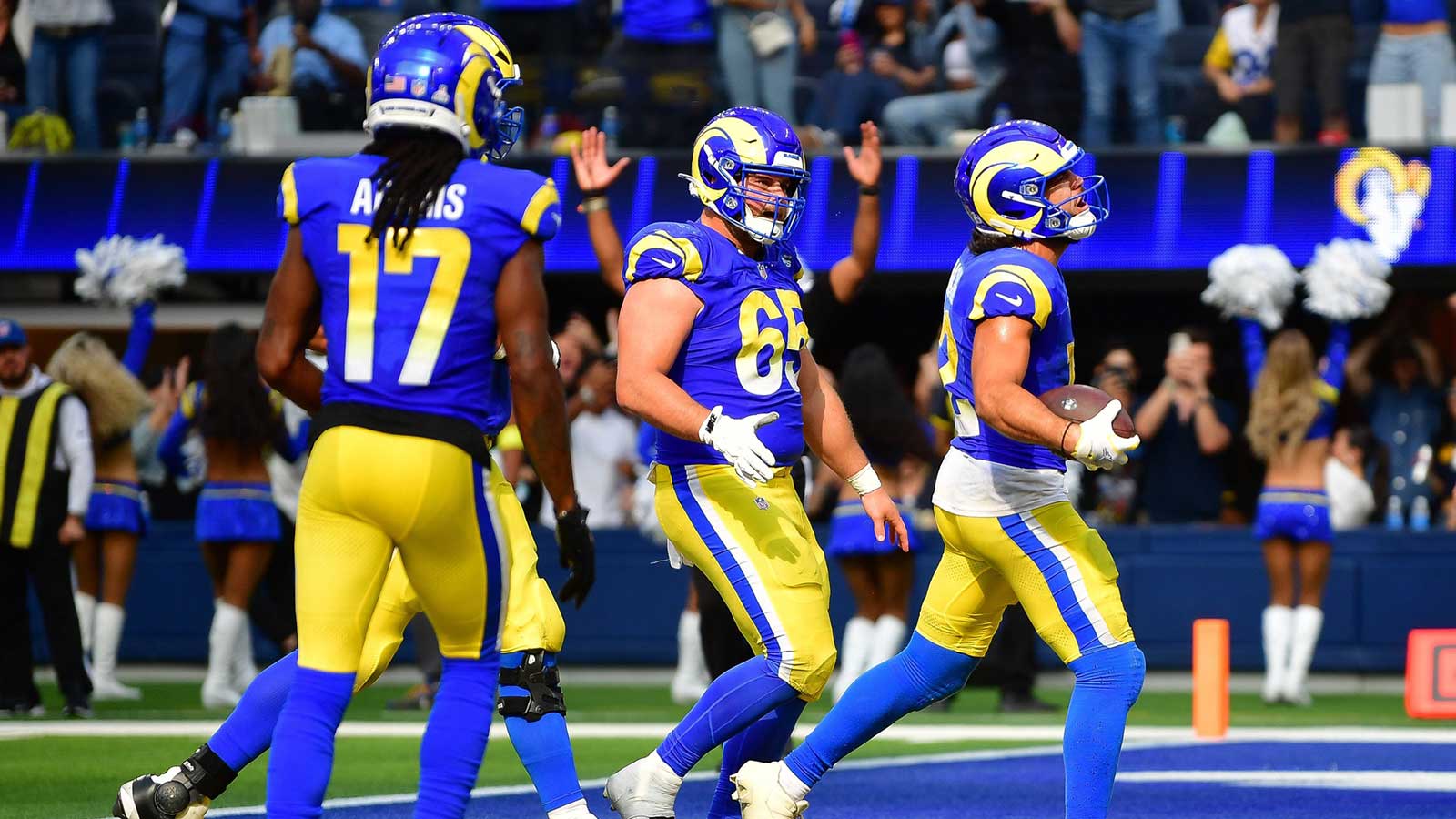
Some teams enter April in need of a rescue, but Los Angeles does not fall into that category. The roster already received a significant boost with the trade that sent their first-round pick to Kansas City in exchange for Trent McDuffie. They also retained the pick acquired from Atlanta, which now stands at No. 13. Les Snead and Sean McVay made it clear during the league meetings that free agency had addressed what many outside the organization viewed as their biggest need. This puts them in a position to select “a quality player” rather than drafting out of panic. Snead’s comments on Makai Lemon perfectly reflected this mindset; he praised the USC receiver but remained tight-lipped about his intentions.
That is the real focus, rather than the buzz surrounding one particular prospect or speculation about the franchise pursuing another veteran star on defense.
The team’s strategy is centered around balance, and a win-now roster is still in place, with Matthew Stafford at its core.
However, the front office is aware that a transition phase for the team is approaching, whether they want to openly acknowledge it or not.
League-wide speculation around Myles Garrett has also hovered in the background, with Mike Sando linking Los Angeles to the discussion after noting how strongly the Rams supported broader future-pick trade flexibility and after an executive said the shift in Garrett’s option-bonus timing made Cleveland look like a team preparing for a trade.
Therefore, the draft is about determining how much of the weekend should prioritize Stafford’s present and how much should be reserved for the future. That is where bold decisions come into play.
The Rams will not use No. 13 on a QB
Kirby Lee-Imagn Images
The temptation to draft a quarterback is understandable, but that’s exactly why it’s important to resist it.
Quarterback discussions often turn the draft into a philosophical debate, and at 38, Stafford’s future is uncertain. There has been speculation about backup options, including names like Kirk Cousins and Jimmy Garoppolo, and also Ty Simpson, who frequently appears in conversations among teams looking for a developmental quarterback who wouldn’t need to step onto the field immediately.
This all sounds appealing from a distance. Selecting a quarterback at No. 13 would allow the Rams to future-proof their roster while claiming to plan for the long term, without actually stepping away from immediate needs.
But this reasoning often falters when real draft scenarios come into play.
The first reason is simple: value.
Los Angeles did not trade a first-round pick for McDuffie only to wield a mid-first selection on a player who is likely to spend most of 2026 on the bench, and a team structured like this must demand immediate contributions from its top draft picks.
That doesn’t mean that a rookie has to become a star right away, but they should help the team perform better, and a first-round quarterback sitting behind Stafford does not fulfill that requirement.
The way this team typically operates when it believes it can still compete is by making aggressive moves rather than opting for passive strategies disguised as future planning, and the aggressive choice is to continue supporting the current competitive window until it closes.
That mindset is what made the McDuffie trade logical in the first place, and if the front office views the next year or two as serious contention years, then their top draft pick must have a more direct impact on those seasons than a backup quarterback would.
For these reasons, the first bold prediction is not that Los Angeles will ignore the quarterback position indefinitely. Instead, it’s likely that the team will wait.
A quarterback selected later on Day 3 is entirely plausible, as is the option of acquiring a veteran backup, but spending the No. 13 pick on a quarterback does not align with the team’s needs, timing, or the typical drafting strategy employed by Snead and McVay when they believe their roster is close to contention.
Makai Lemon is only considered a viable pick after a trade down. He is too well-suited for the team to be excluded from the conversation, but the specific draft slot is important.
Jacob Musselman-Imagn Images
Lemon’s fit with the team goes beyond geographical connections, as his route running is polished, and his play style aligns well with what the Rams typically prefer.
The offense could benefit from another receiver who can create separation quickly, take on responsibilities without requiring the entire game plan to revolve around him, and eventually step into a bigger role if needed. There is nothing superficial about this fit.
What seems unrealistic is assuming that a good fit automatically makes him the right choice at the 13th pick, because the middle of the first round is where decision-making can get tricky, and this is where selecting a wide receiver can become complicated, because a good receiver feels appealing.
After all, the role is basic to explain, while a very good tackle or front-seven player may seem less exciting since those picks usually require more in-depth football knowledge to justify. The Los Angeles front office has enough experience to understand this distinction.
Therefore, a more cautious prediction is not that they will avoid drafting Lemon, but they are more likely to consider drafting him after a modest trade down.
Moving down a few spots changes the calculus. As the receiver remains within reach, the team gains additional picks, and the front office can negotiate a more favorable price for a player who could contribute now and has good potential for future growth.
That approach aligns with how general manager Les Snead typically operates when he likes a prospect but views the draft board as flexible.
There’s another aspect to the Lemon discussion: his skill set is more advantageous in a situation where he doesn’t have to be the primary answer from day one. Los Angeles can provide that environment.
Receiver Puka Nacua already draws defensive attention, and the offense can still create opportunities for others; a rookie receiver in this context wouldn’t need to be a savior but rather would come as part of a structured approach, and this lowers the pressure on the rookie and increases the likelihood that they can contribute effectively right away.
This is one reason Lemon’s name keeps coming up, and the other reason is that Snead’s reluctance to make definitive statements sounds like what a general manager would say when a player is genuinely in consideration, but the draft board hasn’t stabilized. His comments didn’t sound dismissive; they sounded cautiously optimistic.
Therefore, a more realistic interpretation of the buzz surrounding Lemon is not that Los Angeles is committed to drafting him at 13.
Rather, it suggests that if the team can trade down and remain in a position to select him, the fit becomes even more appealing.
The first two draft picks should serve to support Stafford
Steven Bisig-Imagn Images
This is the clearest way to understand how the draft should unfold, and not every move has to focus on offense, but both opening selections should aim to make life easier for the current version of the team.
It can happen in various ways: a tackle can help Stafford directly, a receiver can also help him directly, and a front-seven defender can indirectly assist by shortening games, improving field position, and alleviating pressure on the offense, but the priority should be to choose with 2026 in mind before anything else.
That’s why the first two picks should not awkwardly serve dual purposes, one for now and one for later, because many teams make this mistake and end up with one useful player and one abstract concept.
Los Angeles should avoid this pitfall, and if the first pick is a pass catcher after trading down, the second should be another immediate-impact player, perhaps along the offensive line.
Conversely, if the first pick is a tackle because one is available, the next choice should shift towards another offensive contributor or a defender who can quickly join the rotation.
The key is obviously to avoid half-measures, and there should be no luxury quarterback selected early and no reaching for a player whose optimal impact is likely to be felt only after Stafford is gone.
The draft cannot be timid because the team must acknowledge its competitive window as a current reality rather than a liability.
A draft constructed this way aligns with everything currently observable around this team, and the McDuffie trade indicated that the front office still believes in the present.
The attitudes displayed by Snead and McVay reflect confidence rather than desperation, and discussions about Lemon showed that the offensive side of the board is very much alive.
All these elements point in the same direction.
The post Rams’ bold predictions in 2026 NFL Draft appeared first on ClutchPoints.