
Recently, David Njoku’s visit was an offseason subplot, and the unsuccessful pursuit of Maxx Crosby created another, but neither should dominate the Baltimore Ravens’ draft considerations. When the draft board opens, the key question is how to effectively utilize a significant amount of draft capital this year, with the Ravens holding the 14th overall pick and 11 total selections.
Official team coverage has made it clear through the mock-draft cycle that the most common first-round focus is on offensive line, while defensive tackle appears to be a natural follow-up in the early rounds, and this setup suggests a smarter draft strategy than simply waiting for Friday.
Baltimore should draft an offensive lineman at 14, then use some of its surplus picks to move back into the final stretch of Round 1 for a defensive tackle. This approach is simply a draft plan that aligns with the situation on the board, the roster’s needs, and the value of having multiple picks.
To begin, the first step is that they should stay at 14 and select the best available offensive lineman.
This player could be a guard or a tackle with the flexibility to play inside, and the team might also prefer someone who can eventually take on responsibilities at center.
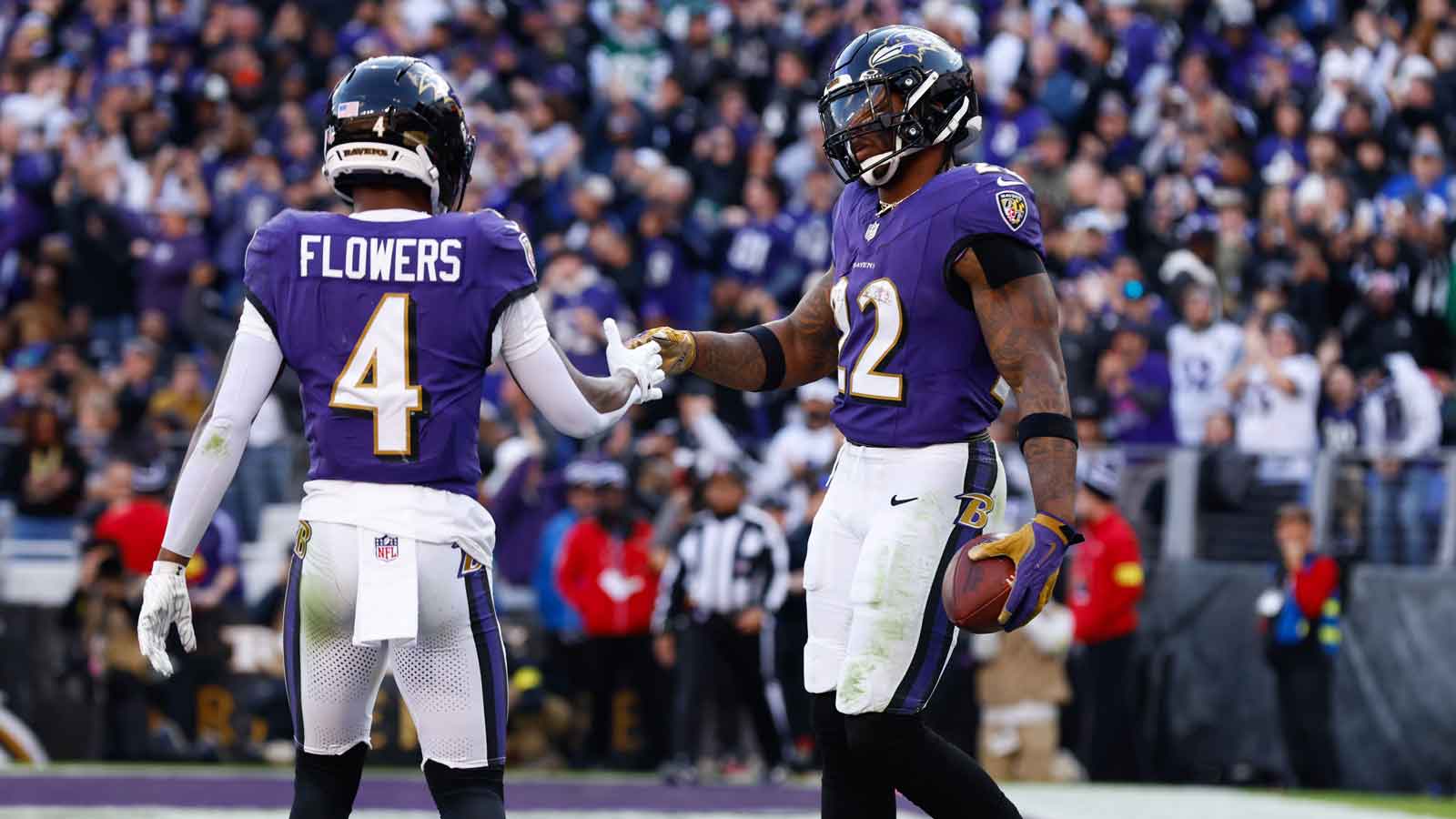
Regardless of the choice, the reasoning is sound, and the Ravens have seen enough buzz around players like Vega Ioane and Spencer Fano to recognize where the league expects value to align with their needs. A strong offensive line still plays a crucial role in supporting players like Lamar Jackson and Derrick Henry.
Many teams would be satisfied with just this selection, but for Baltimore, that isn’t sufficient.
The team has too much draft capital to adopt such a narrow focus, and with picks 14, 45, 80, plus four choices in the fifth round, and an additional sixth and two sevenths, the front office has a considerable board that should encourage movement rather than passivity.
Combining one premium selection with several later picks can yield a decent draft class, but moving back into Round 1 after securing the offensive lineman can create a more coherent overall strategy.
Start with the offensive line
Peter Casey-Imagn Images
No serious draft prep for this roster should begin anywhere else. Mock drafts have consistently linked the Ravens to offensive linemen more often than to receivers, corners, or edge players, and this makes sense for two reasons.
First, the line has significant needs following offseason changes.
Second, the value at that position coincides with where the Ravens are picking, and a team drafting in the middle of the first round should exercise caution about overlooking a premium lineman just to pursue a more glamorous skill position. Other positions, like receiver, tight end, or additional defensive components, can wait because protection is paramount.
Selecting an offensive lineman early would provide obvious benefits, such as cleaner interior protection and reduced weekly adjustments, but more importantly, it would allow the offense to function with greater simplicity.
Jackson excels when he has a stable pocket and the run game creates structured opportunities before he needs to improvise, and given the Ravens’ emphasis on a physical offensive identity, this is not a moment to experiment.
From a draft-value perspective, first-round contracts are more beneficial for expensive positions, where long-term stability can be elusive, and the offensive line meets this criterion.
If the player performs well, the fifth-year option becomes an asset rather than a liability. If he steps in as a starter immediately, the value is even greater, and this is the type of asset that competitive teams should seek to tie to the strongest aspects of their roster.
Once the offensive line is addressed, they should shift their thinking from a team that has just made a significant decision to one that recognizes an opening, and the back half of the first round often presents such opportunities.
When quarterbacks are selected, it causes other players to drop.
Teams may reach for cornerbacks early or chase tackles, and then the board reaches a point where a few teams prefer to trade down rather than settle for a pick from a lower tier.
Baltimore should be prepared to take advantage of this situation, as few teams are better positioned to do so, and with 11 picks, Eric DeCosta has the flexibility to negotiate trades without jeopardizing the remainder of the draft, especially with the extra fifth-round selections serving as valuable trade currency.
What should the target be after moving up
Mandatory Credit: Jessica Rapfogel-Imagn Images
This draft plan becomes practical quickly, as team coverage has already identified tackle as a logical early-round need. The ideal pairing that frequently arises in conversations about the top two picks is that they should prioritize help on the offensive line first, then turn to the defensive line.
Caleb Banks has even been mentioned in official roundup coverage as a strong fit for the second round, highlighting the team’s awareness of this need, even if the specific player changes by draft night.
While waiting until pick 45 could still yield a useful tackle, doing so introduces risk, because interior defenders, like offensive linemen, come in tiers, and once the premium disruptors are off the board, the options shift from players who can change protections to those who might merely become good rotational contributors.
These are not equivalent risks, and Baltimore should understand this distinction and act accordingly, because a roster that knows how it wants to win does not need more uncertain prospects when it has the opportunity to secure a true building block.
Selecting a first-round player for the offense and another for the defense helps the entire roster appear younger and sturdier in the middle, reducing reliance on makeshift solutions, and this is crucial for success, as both interior pressure and interior protection are essential in the postseason. By addressing both needs in one night, the subsequent days of the draft become easier to navigate.
Cost is a natural concern, but the Ravens are one of the few teams that can make this move without compromising their entire draft strategy.
Trading a second-round pick along with some late-round surplus could be sufficient, depending on how far back another team is willing to move, and even if the price includes pick 45, the Ravens would still retain picks 80, 115, four fifths, a sixth, and two sevenths.
This inventory is more than enough to continue adding valuable players during the later rounds.
More importantly, acquiring another first-round pick creates significant contract value, and fifth-year options are particularly advantageous at defensive tackle if the player evolves into a dominant presence.
None of this requires a significant shift in their usual approach. In many ways, it aligns well with their strategy, as they could make a solid pick on the line, aggressively trade back into the round for a tackle, and then use the remaining picks to focus on depth, speed, special teams, and possibly another receiver if the situation allows.
Much draft coverage tends to reduce discussions to player names, being “Which receiver? Which corner?” In reality, draft decisions often revolve around structure, because what makes sense at each position? What can wait, and what cannot?
The post Wild but brilliant move Ravens must make in 2026 NFL Draft appeared first on ClutchPoints.