
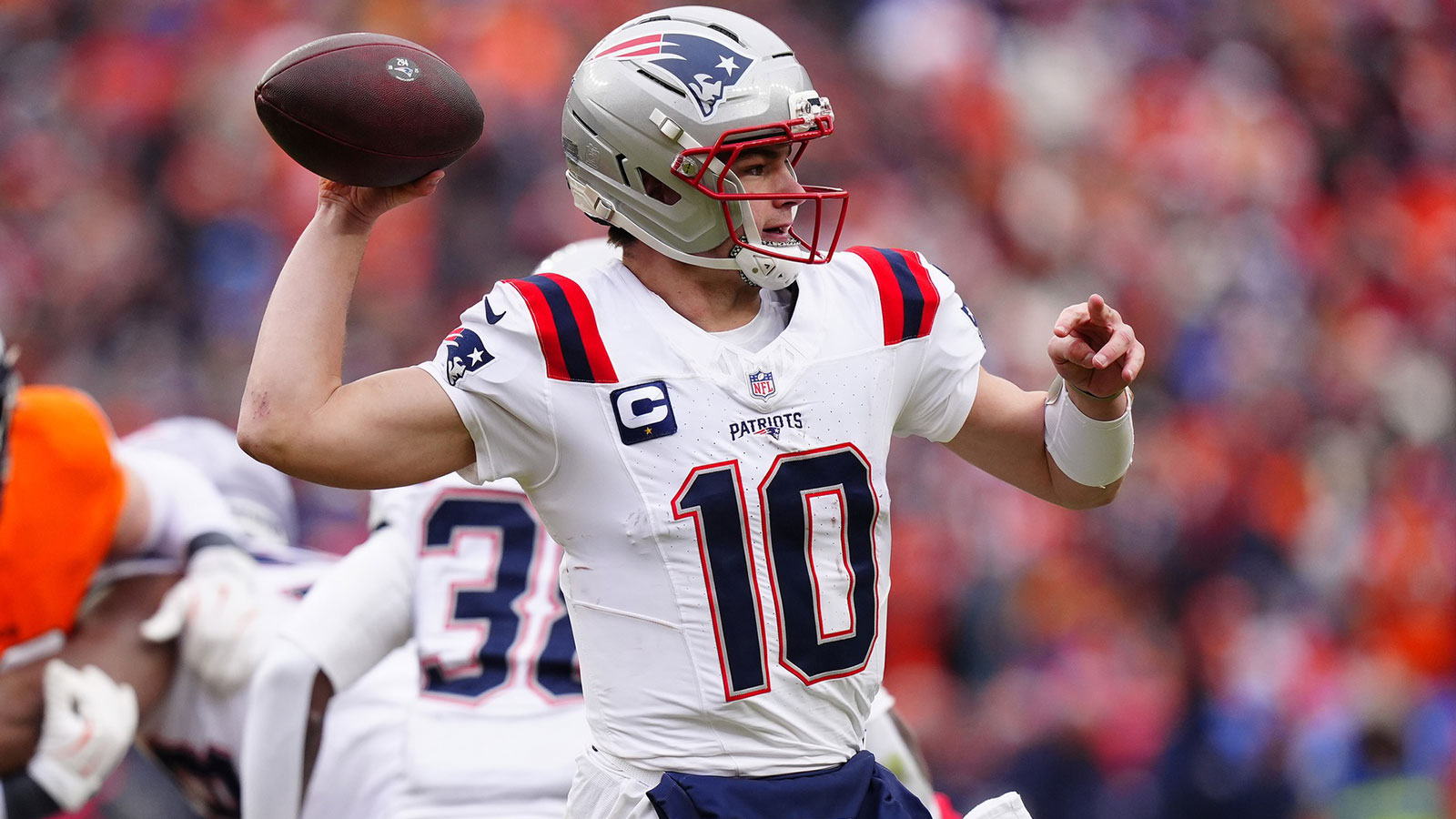
The Patriots have already indicated their pre-draft focus, and Mike Vrabel was observed working with Arizona State tackle Max Iheanachor during pro day.
They recently signed James Hudson to a one-year deal after their Super Bowl loss highlighted the issues with their offensive protection. Clearly, this part of the roster is under review, and the real danger now lies not in recognizing the needs but in addressing them or other positions inappropriately.
The Patriots are no longer in a full rebuild, which makes mistakes more nuanced, and a struggling team might waste a draft pick by selecting a player who simply cannot contribute.
In contrast, a team that is a contender or close to it often wastes picks by choosing talented players who do not fix the right problems. For them, this distinction is crucial because its roster priorities are already apparent.
They have indicated that their biggest needs are along the offensive line, wide receiver, and edge rusher, while tight end and safety are slightly less pressing, and the overarching goal is to stay ahead of impending veteran transitions rather than merely pursuing short-term solutions.
Drake Maye requires a more stable environment to succeed, and the offensive line still needs strengthening, particularly since the long-term situation at right tackle is uncertain, and the left guard position remains a concern.
The offense would also benefit from a more effective outside receiver, while the defense could use another impactful edge rusher. Once these priorities are acknowledged, it becomes much easier to identify which players New England should avoid in the draft.
OT Max Iheanachor, Arizona State
Kirby Lee-Imagn Images
Iheanachor is perhaps the most intriguing name on the list, as he brings real talent and potential. However, he may not be the right choice for New England, especially not with premium draft capital at stake.
The Patriots’ own draft analysis describes Iheanachor as a high-ceiling prospect who is relatively raw, yet already displays the movement skills of an NFL starter. Nonetheless, this tackle class is deep enough to provide New England with other alternatives, and the analysis also emphasizes that wide receiver, edge rusher, and left guard are among the team’s most significant needs.
Selecting a tackle like Iheanachor seems more about preparing for the future after Morgan Moses, rather than addressing the most urgent current issues.
For these reasons, Iheanachor should not be a top priority for the Patriots. He may well develop into a quality NFL player, or even a very good one, but drafting him early would mean betting on his raw potential at a position where depth is available, while leaving more immediate needs unaddressed, and this approach would represent poor sequencing for a team in New England’s situation.
A franchise striving to support a young quarterback should not dedicate premium assets to a tackle who still requires development when it can address more pressing holes and return to tackle later.
There is also a practical football consideration at play, as the official Patriots analysis presents Iheanachor as a right tackle with upside, rather than a plug-and-play solution that can immediately improve the offensive line.
If they use a premium pick on him, it will be opting for a project with potential traits rather than securing a player who can contribute right away. For a different team, that gamble might make sense; however, for the Patriots, whose offensive system still needs refinement and structure, this would be an unnecessarily risky luxury.
WR KC Concepcion, Texas A&M
Concepcion is the type of receiver that evaluators admire for clear reasons because he creates separation, is dangerous with the ball in hand, and brings notable speed and agility to the position.
The Patriots’ own evaluation praises him, describing him as a lightning-quick Z receiver prototype who generates significant separation and forces 14 missed tackles as a ball carrier. However, the main issue lies in the fit, because the same breakdown notes that Concepcion’s route tree overlaps with Stefon Diggs, making him more of a potential replacement for Diggs than a complementary option.
It suggests that New England’s ideal wide receiver addition would be an explosive outside target who can pair effectively with Diggs.
This is the key point, of course, and the Patriots should not invest valuable draft capital in a receiver who replicates what they already have rather than broadening their options.
Currently, New England does not need another player who operates in similar areas or asks the offense to solve the same coverage dilemmas in roughly the same manner. They require a receiver who can diversify the offensive strategy, offering quarterback Maye another legitimate outside threat and prompting defenses to play more honestly across the entire field.
While Concepcion can undoubtedly enhance an offense, he does not resolve New England’s most pressing receiving needs. It is easy to fall into the trap of drafting a good player for the correct position, but in the wrong role, and this is precisely the risk presented here.
If the Patriots emerge from the draft still lacking a natural complementary outside receiver, then spending draft capital on Concepcion would be difficult to justify, regardless of how talented he becomes in theory.
TE Eli Stowers, Vanderbilt
Steve Roberts-Imagn Images
Stowers is not currently a priority because tight end is not considered a critical need.
The Patriots’ draft analysis identifies tight end as one of the areas that requires attention, especially with Hunter Henry at 31 years old and concerns about Austin Hooper’s future with the team. Stowers is mentioned specifically because the analysis highlights a significant difference between Oregon’s Kenyon Sadiq and the rest of the tight end class, labeling Sadiq as the standout prospect.
It notes a considerable gap between him and the expected middle-round talents, with Stowers ranked around No. 66 in the consensus. The analysis also points to Georgia’s Oscar Delp as an appealing developmental option in the middle rounds.
If the Pats decide to spend valuable draft picks on Stowers, especially before addressing more urgent needs, it would be prioritizing a secondary need at a time when the value does not align.
Tight end can be addressed later in the draft, and according to the Patriots’ own assessment, the draft class is better suited for a middle-round approach unless a top talent is available. Consequently, selecting Stowers too early would indicate impatience rather than a clear strategic decision.
They should tread carefully here because tight end is a position that teams often convince themselves to focus on after a Super Bowl loss. It appears smart and strategic, adding one more tool for the offense.
However, this can be a risky move, and New England still has more pressing concerns to address on the offensive line, at receiver, and along the edge.
Until those positions are solidified, reaching for a secondary tight end prospect may suggest a disconnect between the draft strategy and the team’s actual priorities.
S Emmanuel McNeil-Warren, Toledo
McNeil-Warren is an intriguing prospect because the Patriots’ analysis uses him as part of a broader discussion about the team’s needs at the safety position.
The analysis reveals that they are shifting away from their traditional hybrid mold and toward players who excel in deep coverage.
The defense requires safeties that can manage split and post-safety roles, match routes from depth, and cover gaps with range, and in contrast to Oregon’s Dillon Thieneman, who is described as an ideal Patriots safety, McNeil-Warren is viewed more as a player similar to Nick Emmanwori, possessing size, physicality, and some coverage skills, though he may not meet the team’s most pressing needs.
The article specifically states that safety is not currently a critical first-round concern.
Given this, McNeil-Warren should be avoided at a premium draft position, and this isn’t a question of talent but rather a concern about solving the wrong challenge at the wrong time.
They should refrain from using valuable draft capital on a safety whose strengths do not align with their immediate needs, and the team still needs to improve support for Maye, ensure stability on the offensive line, and enhance pass-rush capabilities. Spending significantly on a safety who does not fit the most urgent priorities would likely be a regretful decision that seemed justifiable in the moment.
The overarching lesson with all four of these names is clear because the Patriots should steer clear of them, as each selection would divert the draft strategy away from the team’s most pressing needs.
For them, the real challenge in this draft is about resisting the temptation to draft the wrong kind of good player.
The post 4 players Patriots must avoid picking in 2026 NFL Draft appeared first on ClutchPoints.