
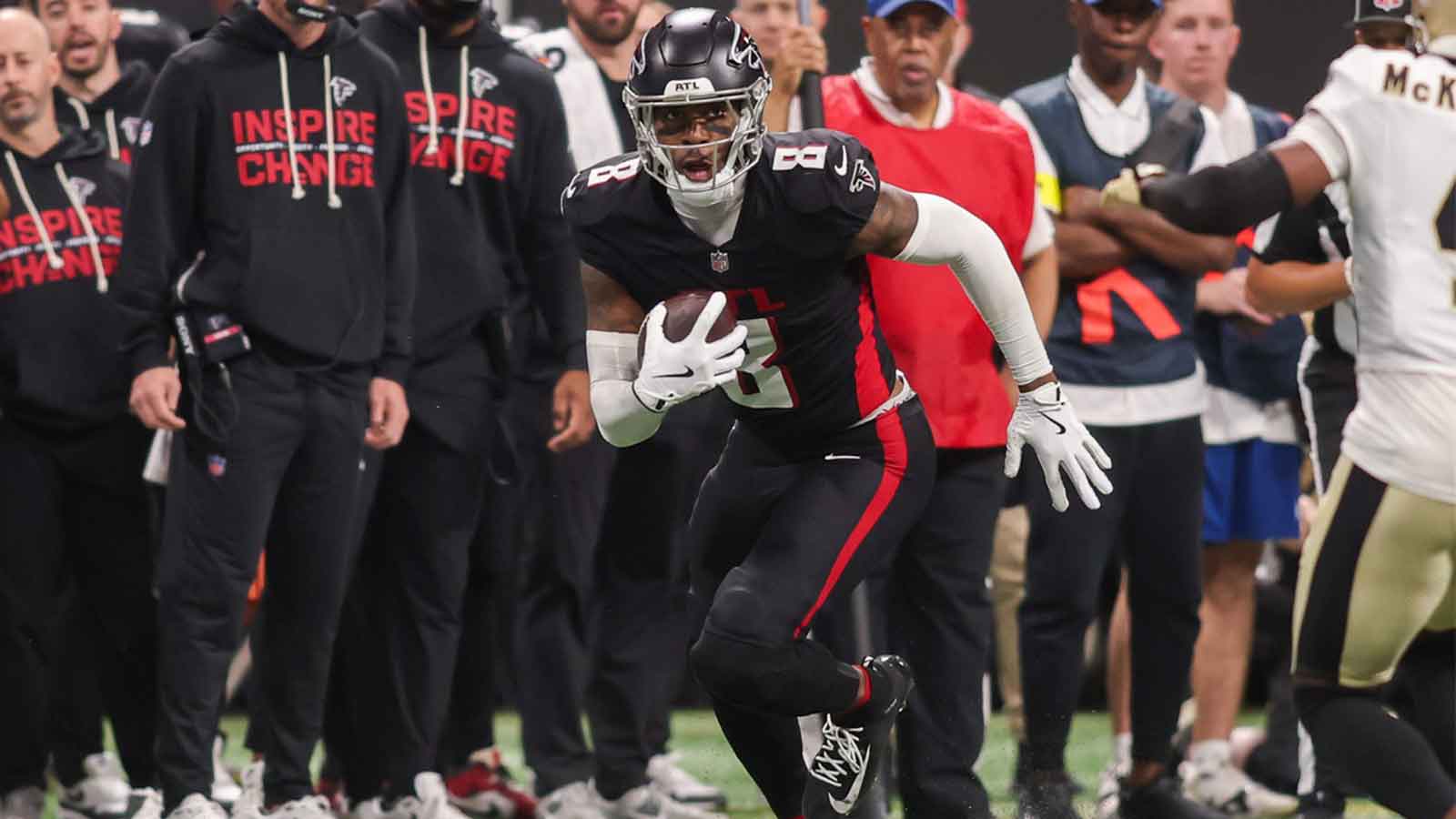
Atlanta’s initial wave of offseason moves paints a clear picture in a short amount of time. Tua Tagovailoa joined the team with the expectation of competing for the starting quarterback position, while Brian Robinson Jr. was added as a physical backfield option behind Bijan Robinson, and these moves indicate that the Falcons are raising the competition at quarterback and enhancing depth behind one of their identified strengths.
However, the draft will likely provide a more revealing look at the team’s direction.
The Falcons do not have a first-round pick and will begin selecting at No. 48 overall, and following a trade with Philadelphia, they currently hold five picks: Nos. 48, 79, 122, 215, and 231.
This limited selection is significant because it changes the dynamics of their strategy, and Atlanta cannot afford to take random chances as they need to approach Day 2 of the draft with intention, particularly as the roster has already added veterans like Tua, Brian Robinson, Azeez Ojulari, Christian Harris, and Austin Hooper without addressing some of their more pressing medium-term needs.
Interestingly, the draft board does not suggest a single clear direction, and various mock drafts project the Falcons to target positions such as tackle, defensive tackle, tight end, and edge rusher, indicating diverse interpretations of the team’s needs across the league.
The new offensive additions have intensified competition, but not created total clarity, as the offensive line still features two older starting tackles, Jake Matthews and Kaleb McGary, while the interior defense needs more size and strength.
Additionally, the skill positions may call for another long-term addition if the right player is available, and this is why the Falcons’ current position in the draft feels less constrained than the typical “best player at your biggest weakness” approach.
OT Max Iheanachor, Arizona State
Field Yates suggests that Atlanta could address their future needs by selecting Max Iheanachor at No. 48 in his latest two-round mock draft.
He notes that while the Falcons’ starting tackles are currently solid, there are concerning factors, namely that Jake Matthews is 34 and Kaleb McGary is 31, and this makes Iheanachor a compelling option, as his development timeline aligns with the team’s roster needs.
Having not played high school football, he has less wear and tear compared to many players in this draft range.
Yates also highlights his steady improvement at Arizona State and his impressive physical attributes, especially his 83¼-inch wingspan and an ideal body type for an edge player.
Atlanta wouldn’t be drafting him out of urgency but to proactively secure a key position before the need arises, and this call is sensible for a team looking to balance immediate competitiveness with a long-term roster strategy.
DT Kayden McDonald, Ohio State
Jordan Reid identifies a pressing need for the Falcons and addresses it by projecting Kayden McDonald to Atlanta at No. 48 in his early March mock draft.
Reid’s reasoning is hard to dispute, especially if one observed the Falcons’ performance last season, as he points out that the nose tackle position is a clear need and describes McDonald as a robust interior player who led the nation in run stop win rate at 7.8 percent, while also demonstrating sufficient pass-rushing ability.
This sets him apart from mere space-fillers; McDonald is viewed as a player capable of shutting down the run while preventing predictability in the pass game.
Even though Atlanta bolstered its defense in free agency, it should still pursue a true interior anchor if one is available on Day 2, and his projection aligns with the vision of a Kevin Stefanski-led team: tougher and more resilient in the middle, less reliant on edge speed for pressure. Though this style of football may not be glamorous, it is the kind that tends to succeed.
TE Eli Stowers, Vanderbilt
Matt Miller takes a more intriguing and bold approach by selecting Eli Stowers for Atlanta at No. 48 in his two-round Senior Bowl mock draft.
His proposal was initially based on the possibility of Kyle Pitts Sr. entering free agency, suggesting Atlanta might need a new starting tight end; however, the core idea remains relevant regardless of other roster changes.
Miller describes Stowers as a true F-tight end prospect with a playing style reminiscent of Harold Fannin Jr.
This is significant, as it indicates the type of offensive weapon Miller believes Atlanta could use, and Stowers is not just a blocking specialist or red-zone accessory; he is seen as a versatile skill player capable of creating mismatches and providing the quarterback with easier completion options over the middle.
Given the current dynamics in Atlanta, adding Stowers could enhance the offense, which already relies heavily on Bijan Robinson and Drake London.
His presence would facilitate connections in the offense, keeping it from becoming overly predictable, especially as the team seeks to support whichever quarterback secures the starting role. Miller’s mock is particularly scheme-driven, which is why it warrants attention.
EDGE R Mason Thomas, Oklahoma
Gordon McGuinness, Pro Football Focus
Gordon McGuinness has highlighted R Mason Thomas from Oklahoma at No. 48 in his March 16 mock draft for Pro Football Focus, and this selection makes sense when we move past the quarterback discussions and take a closer look at the current roster.
While the Falcons have made some additions, they are still a team that could benefit from another shot at enhancing their pass rush, especially this early in Day 2 of the draft.
The appeal of Thomas is clear because he showcases a quick first step, allowing him to pressure offensive tackles, forcing them to play on their heels. He fits the mold of edge rushers that teams often seek, athletic players who may not be fully polished yet but possess the potential to become significantly more disruptive with the right coaching.
McGuinness’ mock draft is important because it reminds us that Atlanta’s offseason, while naturally focused on the quarterback situation, has not centered solely on offense.
The Falcons are striving to build a team that doesn’t rely heavily on the quarterback position to succeed every week, and adding a young edge rusher with proven potential aligns well with this objective, especially on a roster that has already taken steps to ensure depth in skill positions.
Because of this, they can afford to invest a premium pick in strengthening their front line. Thomas simply needs to add depth to the defense, providing coaches with a player they can develop, which is often a crucial bet during this phase of the draft.
Taken together, these mock drafts shed light on the current state of the Atlanta Falcons because they are perceived as a team whose first significant choice at No. 48 should clarify the direction of their offseason strategy.
Selecting a tackle would indicate that the team aims to proactively address potential future issues on the offensive line before they become costly and urgent, a defensive tackle would suggest that the front line requires more strength and dependability in the middle, and choosing a tight end could mean the coaching staff desires another versatile piece for an offense that may change once the quarterbacks are sorted out in training camp.
Conversely, selecting an edge rusher would demonstrate that the most strategic way to improve the entire roster is to create more difficulties for opposing quarterbacks.
This is a much healthier selection of options than what teams typically face when their rosters are in disarray.
Although Atlanta may not enjoy the luxury of a first-round pick, they still have the opportunity to make a meaningful choice, which can be far more valuable than many acknowledge.
The post Falcons’ 2026 NFL Mock Draft roundup after NFL Free Agency appeared first on ClutchPoints.
