
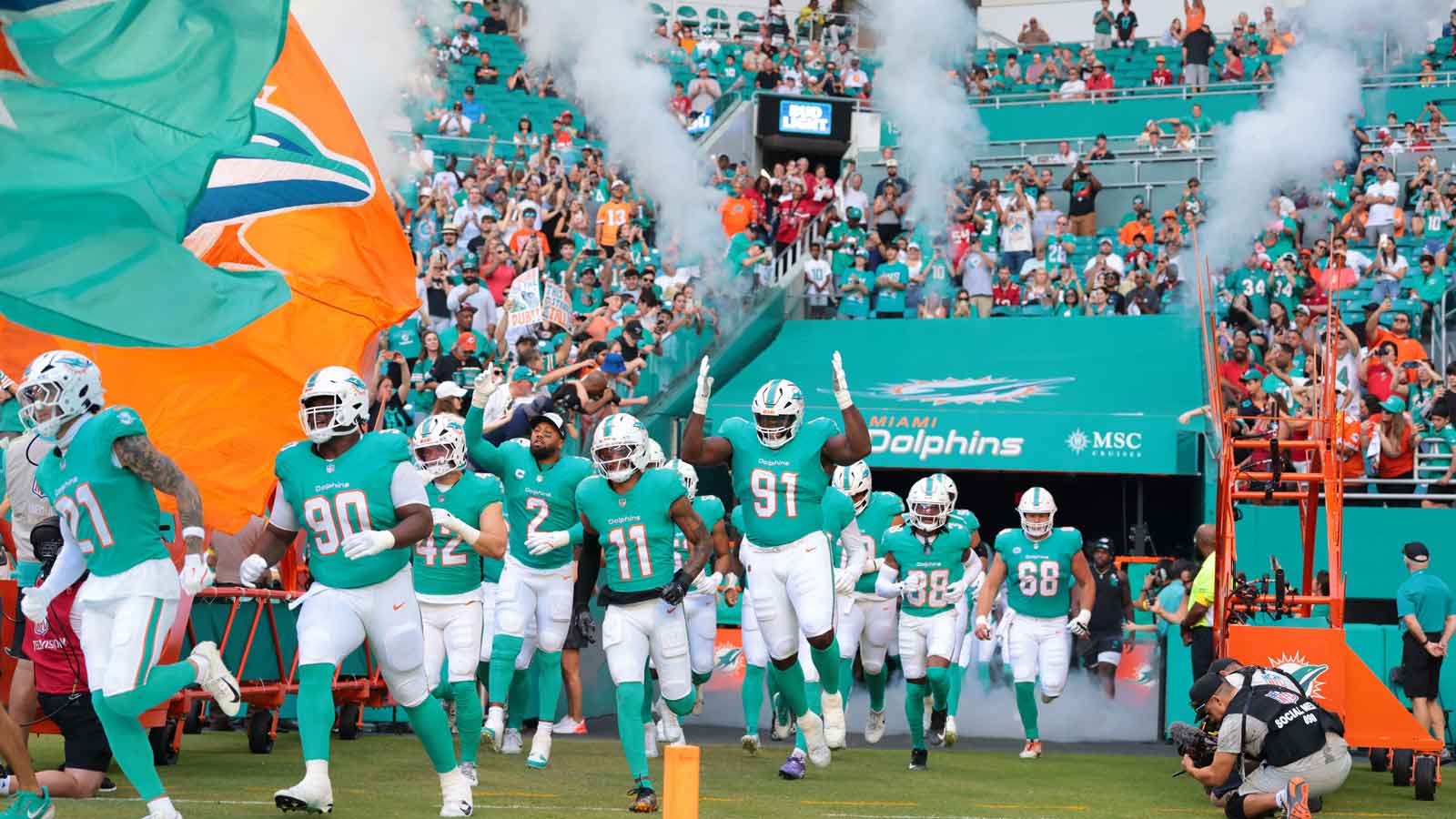
The Miami Dolphins did not wait for free agency to begin acting like a team in the middle of a significant reset. Before the legal negotiating window even opened, the front office moved on from two staple veterans in a clear signal that the previous era’s philosophy has been retired. NFL Network’s Mike Garafolo reported that Alec Ingold and the Dolphins were parting ways after discussions regarding a revised deal failed to find common ground.
Shortly after, ESPN’s Adam Schefter reported that Jason Sanders was also headed out after eight seasons with the franchise, as the sides could not agree on a contract extension following his 2025 injury stint.
While these moves were finalized and made official by the team this week, their impact reaches far beyond the depth chart. Ingold’s exit saves the Dolphins a little over $3 million against the cap, a vital sum for a team that has been wrestling with a massive cap deficit.
Sanders’ departure, meanwhile, marks the end of a long-term relationship with one of the most consistent specialists in team history. These cuts do not answer the lingering questions about the quarterback room or the overall roster depth, but they frame the 2026 offseason correctly.
This is a front office led by Jon-Eric Sullivan and head coach Jeff Hafley that is trying to strip away old costs and give the new regime a clean board heading into free agency and the draft.
This aggressive restructuring makes the Dolphins one of the more interesting teams in the post-combine mock cycle. Picking at No. 11 puts them in that specific section of the first round where the board can either break beautifully or turn irritating in a hurry.
They are not high enough to dictate the flow of the top 10, but they are high enough that a blue-chip prospect should be available if they read the room correctly. After a week in Indianapolis, where several top targets verified their collegiate tape with elite testing, the projections for Miami have clustered around three core ideas grounded in structural roster failures.
CB Mansoor Delane, LSU
Tim Crean sends LSU cornerback Mansoor Delane to Miami at No. 11, and if you have followed the Dolphins’ defensive struggles over the last two seasons, the pick does not need a dramatic sales pitch. Delane is one of those prospects whose fit becomes obvious the moment you consider how Jeff Hafley would actually like to call a defense.
As a former defensive backs coach, Hafley understands that a weak corner room ripples through the entire unit. It changes safety rotations and forces the coordinator to call a smaller game out of fear.
Delane is also attractive because he looks like a player you can actually line up on the outside and trust. His 2025 tape at LSU was a masterclass in eye discipline and route recognition, as he finished the season without being called for a single penalty.
According to PFF, Delane allowed a passer rating of just 31.3 when targeted, which ranked second among all qualified cornerbacks in the 2026 class. Standing 5-foot-11 and weighing 191 pounds, he verified his athleticism in Indianapolis with a 4.46-second 40-yard dash and elite click-and-close numbers that suggest he can mirror the NFL’s twitchiest vertical threats.
Crean argues that Miami has spent enough time chasing raw speed and hoping the technical skills would follow, and this could be a lottery ticket. He allows the safeties to stay aggressive in the box and gives the pass rush that extra second needed to get home, and if the Dolphins believe their perimeter coverage is the primary reason the defense has played soft in critical moments, Delane is the most direct answer on the board.
OT Francis Mauigoa, Miami
Jordan Reid goes a different direction and gives Miami a local answer with Hurricanes tackle Francis Mauigoa. This projection suggests that the Dolphins are finally ready to stop pretending the offensive line can be patched on the fly with mid-round flyers or veteran stop-gaps, and Mauigoa is the type of pick that signals an organizational shift toward trench dominance. He brings a level of size and physical power, with 6-foot-5.5 and 329 pounds, that this roster has too often lacked in favor of finesse.
Mauigoa is a pick that shows that he is there to make the offense less chaotic. In 2025, he was a model of consistency for the Hurricanes, allowing only 15 pressures over more than 1,000 snaps. His 33 1/8″ arms were officially verified at the combine, quieting any lingering concerns about his ability to stay on the edge at the professional level. Reid plans that pairing Mauigoa with current tackle Patrick Paul would give the Dolphins’ new regime a pair of bookend tackles to start their rebuild around.
Taking Mauigoa would be Miami admitting that it is tired of watching its protection buckle in cold-weather games or against physical defensive fronts. He is a “mauling” presence who can generate vertical displacement in the run game, a vital trait for a team that wants to maximize the speed of De’Von Achane.
If the organization has decided that the line of scrimmage is where the next version of the team must start, Mauigoa is the foundational piece required to make that a reality.
EDGE David Bailey, Texas Tech
PFF sends Texas Tech edge rusher David Bailey to Miami at No. 11, a selection for those who believe the Dolphins’ defense has been too dependent on scheme rather than raw force.
The reasoning is straight to the point: Jeff Hafley wants to get meaner in the trenches. Following the departure of Bradley Chubb and the previous trade of Jaelen Phillips, the front seven lacks a game-wrecker, and Bailey’s combine performance only made him look more like a surefire top-15 bet, as he clocked a 4.50-second 40-yard dash at 251 pounds.
Bailey’s appeal is centered on his explosive first step and a polished pass-rush repertoire that includes one of the most violent spin moves in the class. He finished his final collegiate season with 14.5 sacks, leading the FBS and helping the Texas Tech football team to reach the College Football Playoff.
His appeal here is that pressure changes everything behind it for a team like the Dolphins, and it also speeds up the quarterback, making average coverage look elite.
Miami believes the fastest way to improve the whole defense is to make quarterbacks uncomfortable from the first snap, and Bailey is the coherent choice for them.
The risk is that passing on a corner like Delane leaves a visible hole in the secondary. However, if the front office thinks a dominant edge presence can mask deficiencies elsewhere, Bailey provides the “sauce” that has been missing. He also recorded a 35-inch vertical and a 129-inch broad jump in Indianapolis, confirming he has the lower-body explosion to bend around the arc and flatten to the quarterback.
The patterns emerging after the NFL Combine suggest that the Dolphins are no longer interested in decorative roster pieces. Instead, the organization is identifying and addressing the foundational fractures that have hampered previous seasons.
Whether they choose to prioritize a secondary that lacks a reliable outside eraser, an offensive line that remains too fragile to sustain the run game, or a defensive front that needs a violent edge presence to dictate the tempo of the game, the No. 11 pick will be the first definitive statement of the new era.
The release of long-term veterans like Ingold and Sanders was the necessary clearing of the board because the upcoming draft is where Miami begins to draw its future for a new year and a new season of possible glory.
The post Dolphins’ 2026 NFL Mock Draft roundup after NFL Combine appeared first on ClutchPoints.
