
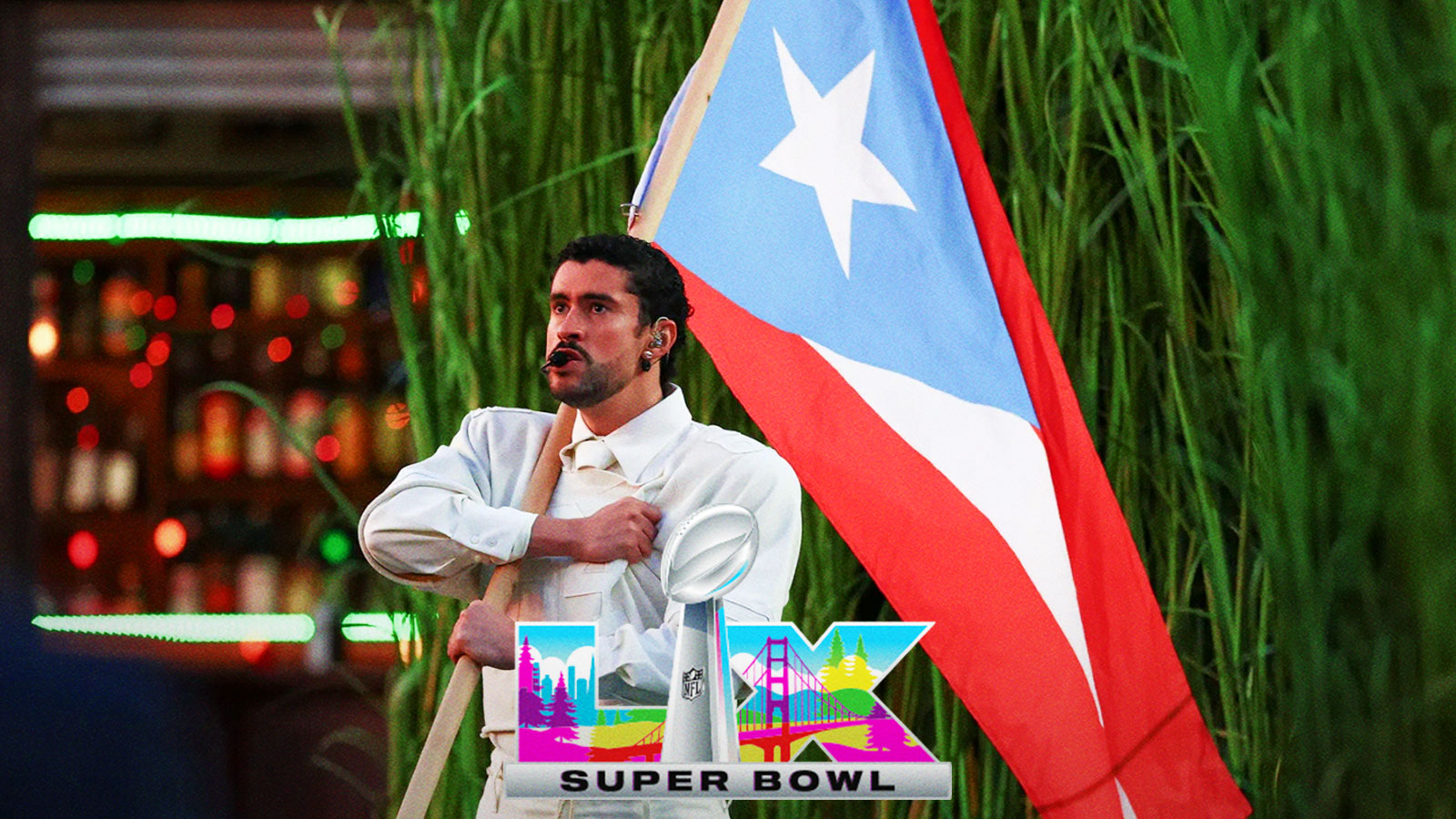
The Super Bowl 60 season is now officially over, and it concluded with the Seattle Seahawks dominating and beating the New England Patriots 13-29 at Levi’s Stadium in Santa Clara, California. Despite a disappointing end to the night for the Patriots’ fans, the halftime show on Sunday, Feb. 8, 2026, featured an iconic performance by Bad Bunny.
Just a week after winning the Grammy award for Album of the Year for Debí Tirar Más Fotos, Bunny rocked the stage with his eight-song performance, most of which were from his latest album. A memorable performance, Bad Bunny’s set also left fans wondering about the deep, hidden meaning and symbolism left behind by the artist.
The opening shot of the sequence begins with a short clip showing the lush green fields of Puerto Rico before transitioning to the stadium’s grand stage. The field was filled with people in grass and bush costumes and workers wearing pava straw hats, paying a direct homage to the jíbaros, the 19th-century agricultural workers who worked Puerto Rico’s sugarcane fields.
The set also included traditional Puerto Rican instruments, as Bad Bunny represented the Bomba and Plena music traditions. The traditional instruments included the Pandero, Cuatro, Güiro, Maracas, Palitos, and the Cencerro.
The stage also featured a miniature house, which recreated Bad Bunny’s “No Me Quiero Ir de Aquí” residency. During that residency, the miniature house served as the VIP area for celebrity guests. On Sunday, it served a similar purpose as Pedro Pascal, Cardi B, Jessica Alba, Karol G, Alix Earle, and Young Miko danced around it, recreating the atmosphere of a Puerto Rican house party. The cameos also included a brief performance by the legendary Ricky Martin, Lady Gaga, and more.
More hidden symbolism from Bad Bunny’s Super Bowl performance
Mandatory Credit: Kirby Lee-Imagn Images
The Levi’s Stadium stage was also transformed into a real-looking Puerto Rican neighborhood with severe attention-to-detail and notable local inclusions, a nail salon, a barber shop, a boxing ring, domino tables, a sleeping kid, a Piragua stand, sugarcanes, and most notably, the real-life Villas Tacos.
A real-life wedding also took place at the Halftime performance, where, according to NBC’s Rohan Nadkarni, the couple had invited Bad Bunny to their wedding but instead got invited to the show by Bad Bunny with the offer to get married during his performance. Bunny wore a custom white leather football jersey designed by Zara that featured “Ocasio”, his mother’s surname, honoring his maternal legacy. Nadkarni also noted that the “64” on his jersey was a tribute to his late uncle.
A powerful message that took place during the halftime show was Bad Bunny presenting his real-life Grammy Award to a kid. While many believed the kid to be Liam Ramos, a child who was detained with his father by ICE, the rumor was later debunked. The moment suggested a symbolic connection between a child of a similar age who could focus on receiving recognition and love, instead of cultivating fear and anxiety of immigration, and the sense of belonging.
Bunny also delivered a strong message as violinists performed “Monaco” in the sugarcane fields (quotes translated from Spanish by TheSportingNews). “My name is Benito Antonio Martínez Ocasio, and if I’m here today at Super Bowl 60, it’s because I never, ever stopped believing in myself. You should also believe in yourself. You’re worth more than you think. Trust me.”
The entire show was based on the thought and ideology of love and belongingness. Bunny’s powerful message was addressed as a reminder to never stop believing in oneself. Bunny, who himself comes from humble beginnings, found success and performed at one of the biggest platforms in the USA.
Coquí, a small tree frog native to Puerto Rico and a beloved symbol of the island, made an appearance during the performance. It represented Puerto Rican identity. Midway through the show, Bunny also stood on an elevated platform that bore a resemblance to Beryl Lewis’ 1965 painting Sermon on the Mount, which symbolized a figure addressing and uplifting a crowd below.
The performance also had Bad Bunny climbing up on top of electric towers to perform “El Apagón.” The song is a protest song about the island’s infrastructure failures following Hurricane Maria, government corruption, and the fear of gentrification. The electric power lines, the exploding poles, and the independence flag (featuring the light blue color instead of the dark blue) made a strong political statement as they directly referred to Puerto Rico’s ongoing mass electrical power crisis.
Bad Bunny’s Super Bowl Halftime show finale explained
Darren Yamashita-Imagn Images
Bad Bunny concluded his performance with “Café Con Ron,” during which he spoke his only English words of the entire show, “God bless America.” He then proceeded to name several Latin American countries before finishing with the USA, Canada, and Puerto Rico. The football from the beginning of his performance reappeared as he held it up for the cameras to show the words, “Together We Are America,” before proceeding to spike it.
The performance displayed a strong sense of connection, love, and community. It also rejected the ongoing narrative on social media regarding the difference between Puerto Rico and the USA, which rose to prominence after Bad Bunny’s Grammy win and ICE speech.
The post Know the hidden symbolism behind Bad Bunny’s epic Super Bowl Halftime Show appeared first on ClutchPoints.
