The college basketball landscape is in as volatile a place as it has been in quite some time. The implementation of NIL in July 2021 and an essentially unregulated free agency market, the rising popularity of legalized sports gambling, and a lack of clarity around eligibility rules have the sport in a Wild West era that one day will likely be looked back upon in disbelief.
On the court, the long-suffering Nebraska Cornhuskers are having an uncharacteristically great season. Are they really a title threat, or is it fool’s gold? The NCAA Tournament received mixed reviews last season due to the consistent chalk from start to finish, but can we really count on any meaningful change this year?
Will the new transfer window really transform college basketball’s offseason in the way it’s being advertised? And how did college basketball, such a beloved institution, get to the point it’s at today?
(Photo by Steven Branscombe/Getty Images)
1. Is Nebraska Really This Good?
It seems we’re in a backward universe in the Big 10 with Indiana football winning the national championship on Monday evening and Nebraska basketball tracking towards a No. 1 seed in the NCAA Tournament, but that’s the universe we’re living in. The main question that faced Curt Cignetti and the Indiana Hoosiers during their football rebound was whether or not they could consistently perform at their peak against the best opponents and in the biggest moments.
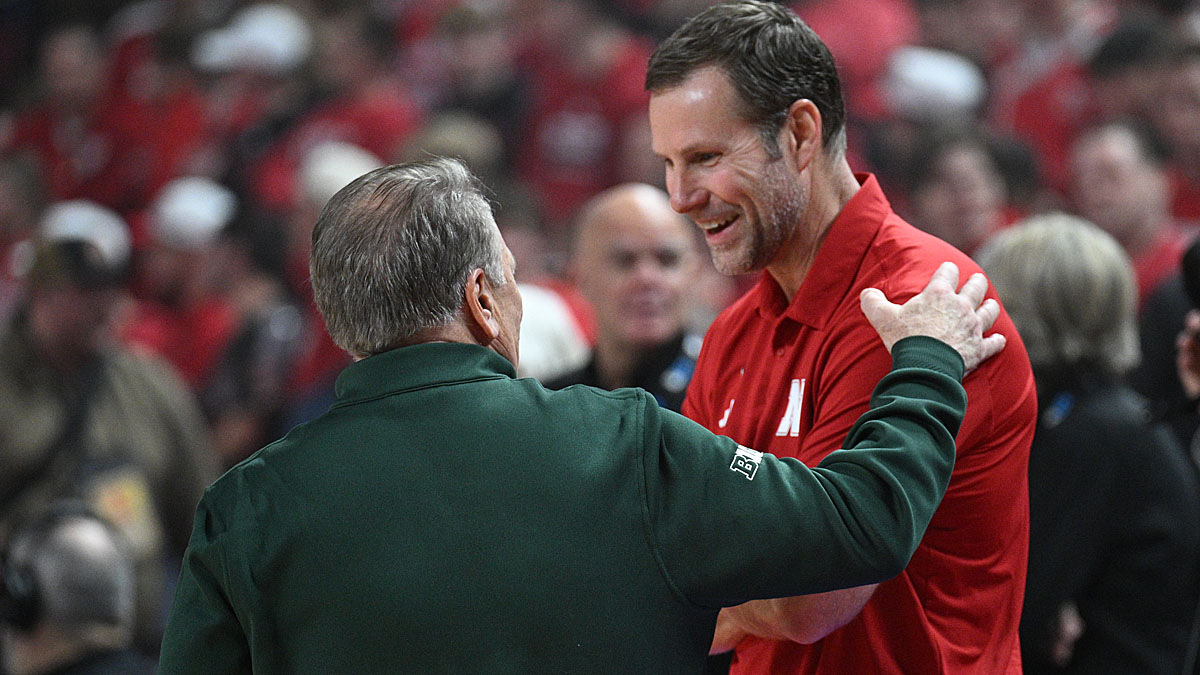
Like the Hoosiers, Fred Hoiberg and his basketball Cornhuskers have stood tall in front of every task they’ve faced, even earning one of the best pound-for-pound wins of any program this season on the road against No. 13 Illinois. The Huskers have the second best strength of record in the country behind No. 1 Arizona, and they are one of two teams in the country with seven quality wins as of Saturday.
Another similarity between Indiana football and Nebraska basketball is that both programs are almost entirely reflections of the head coach. Nebraska doesn’t have the flashiest roster and they aren’t raking in 5 star prospects with a massive NIL fund, but they are a team that has a hard-nosed identity and plenty of collective experience that has certainly been serving them well during this hot start. They may not win the national championship, but these aren’t your father’s Nebraska Cornhuskers. — Will Despart
2. Are Mid-Major Bracket Busters a Thing of the Past?
Last season’s NCAA tournament concluded with a Final Four full of No. 1 seeds and a classic National Championship bout between Florida and Houston. The most common complaints immediately after were focused on lack of upsets and how chalky the bracket was because of the growing talent disparity between mid and high major programs. Unfortunately for those who tune in to see a St. Peter’s or a Fairleigh Dickinson work their magic, those beloved small-school runs may have gone the way of the Do Do in the modern NIL era.
Instead, the upset runs you’ll now see in the NCAA Tournament moving forward will be power conference programs than were relegated to an 8-through-12 seed because they underperformed in the regular season, but managed to find a rhythm in time for the postseason tournaments. Think N.C. State in 2024 or even Arkansas nearly making it to the Elite 8 as a No. 10 seed last season.
As such, any mid-major upset, especially one that features a 13-through-16 seed in the tournament, should be treated with historical reverence. This isn’t the 90s or the 2000s, where you could have a few diamonds in the rough guys that transform your mid-major program like 2004 St Joseph’s or 2009 Siena. Instead you see those players transfer out as sophomores to finish their career with a school higher up on the NIL ladder. — Will Despart
3. Is This The Year The Big 10 Ends The Drought?
2024-25 was a historically strong season for the SEC, with 14 teams qualifying for the NCAA tournament, six advancing to the Sweet 16 and Florida claiming the conference’s first national championship since 2012. However, a surprise coaching change at Auburn, roster turnover at Florida, and general regression from most of the conference’s best teams from last year have it looking a little funny in the light this season compared to the Big 10 and the Big 12.
It’s no secret that the Big 10 is in the midst of an unfathomable title drought since Tom Izzo and Michigan State won the 2000 NCAA Tournament. There’s also little debate that the Big 10 is the top dog conference in college hoops this season top to bottom, like it was for much of the 2010s, despite the fact that title drought remained intact throughout the decade.
Now as we descend on the back nine of the 2020s, the Big 10 may be staring down it’s best chance to win the NCAA Tournament since Mateen Cleaves and company did so over a quarter century ago now.
Michigan appears to be a historically strong national contender, sitting atop both the KenPom and Torvik ratings with top 5 offensive and defensive metrics nationally, according to both statisticians. Purdue, led by National Player of the Year candidate Braden Smith and South Dakota State transfer Oscar Cluff, is also as formidable a title threat as it was two seasons ago when when Zach Eddy led the Boilermakers to the national title game. And you can’t forget the 17-0 Nebraska Cornhuskers, who are now improbably ranked eighth in the latest edition of the AP Poll and could be tracking toward a No. 1 seed in the NCAA Tournament. — Will Despart
4. How Will the New Transfer Window Change Things?
The NCAA gets plenty of blame for the current state of the game, but it recently made some rules changes that got something right. Since the transfer portal was introduced in the fall of 2018, the transfer window (started in 2022-23) has created a system that favors mediocre teams. The old 30-day window opened during the NCAA Tournament, where stronger teams were obviously focused on winning games with the current roster.
The old window gave lesser teams the opportunity to focus on roster retention and building. Now the window is reduced to 15 days and opens the day after the NCAA D1 title game. Additionally, there is a 15-day window to enter the portal five days after a program announces a new head coach. Although this doesn’t fix the problem of unsavory agents looking to move their “client” for a better deal year-round or hard-to-regulate poaching, it does give teams that go deep in the NCAA Tournament a fairer chance to recruit the most sought-after players in the portal.
An even better direct rule change went into effect regarding mid-year transfers, implemented to curb what looked like NCAA free agency and to hopefully curb the college game mirroring a form of pro basketball. Mid-year transfers are not eligible to compete at a second program if they enrolled at another program during the first academic term, regardless of their playing status at the first program. — Ronnie Flores
Like 92% of NIL is a workaround to funnel money to college athletes…but don’t worry after 60 years of the NCAA never stopping “extra benefits,” CSC is on the case https://t.co/dJrn4BDXJ1
— Marc Isenberg (@marcisenberg) January 6, 2026
5. How Did College Basketball Get to Its Current State?
Simply put, the current state of the game is the result of greed rather than forward, progressive thinking from the NCAA. When the TV contracts and salaries for successful football and men’s basketball head coaches skyrocketed 30 years ago, the organization that oversees college athletics could have simply conceded that the players deserved a bigger piece of a growing pie.
In 2000, perhaps the public wasn’t ready for the “play to play model” that now operates under the guise of Name, Image, and Likeness (NIL), but the NCAA could have rolled out similar initiatives around the turn of the century so the public would have better understood it in the decades to come.
Rules surrounding NIL could have been created and tweaked over the years to make it sustainable. It was only a matter of time before public opinion turned against the NCAA, and it chose to spend millions of dollars protecting antiquated bylaws that, in many instances, violated antitrust laws rather than instituting NIL bylaws. Some point to the O’Bannon vs. NCAA ruling in summer 2014 as the time period in which the NCAA should have acted on behalf of the student-athletes, but even by then it was too late in the game. The tide was already turning against the organization, whose membership decided to protect amateurism and were unwilling to deal with the economic and legal realities that would eventually slap them in the face. On July 1, 2021, legislation in several states went into effect, green-lighting Name, Image, and Likeness (NIL) freedoms for collegiate student athletes, which forced the NCAA to quickly implement NIL policy across all 50 states.
In recent years, the NCAA has lost court case after court case and it now seems to be throwing the white flag at legal battles while hoping for Congressional intervention. That could happen, but for now we have unregulated chaos, and NIL freedoms being used as a proxy for roster attainment. And it was all avoidable. — Ronnie Flores
Editor’s Pick
The post 5 Burning College Hoops Questions For 2026 appeared first on Ballislife.com.