
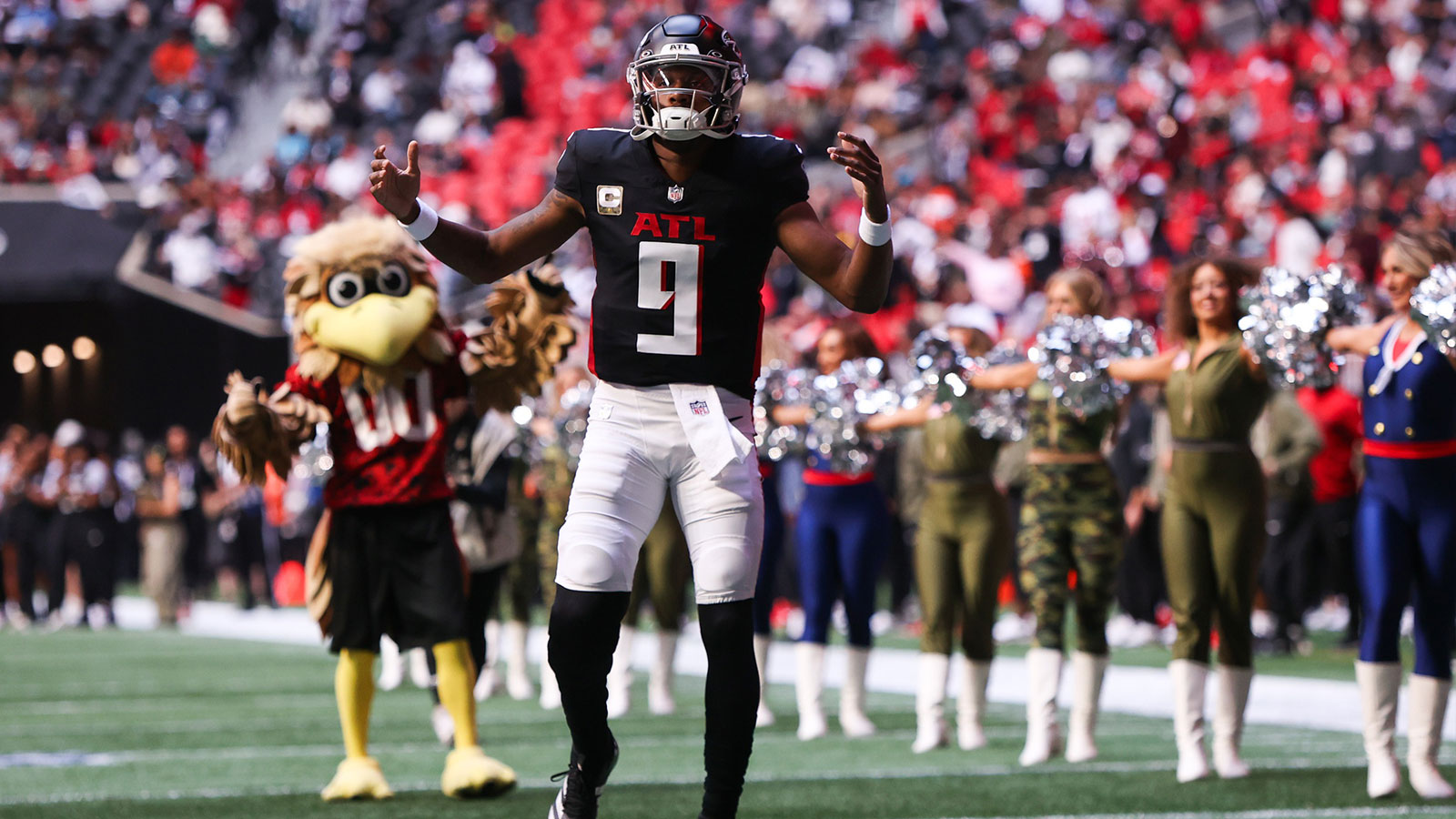
Atlanta’s draft situation has an unusual shape this spring. The most pressing concern remains the pass rush and the defensive front, despite the Falcons adding veterans like Azeez Ojulari, Samson Ebukam, and Cameron Thomas in free agency. Additionally, the front office has seen notable changes with Jeff Scott joining as the assistant general manager after coming from Philadelphia.
As the weekend approaches, Atlanta faces the challenge of entering the draft without a first-round pick and with only five total selections, starting at No. 48. This means every decision made carries extra weight.
In this context, the Falcons cannot afford to engage in “draft tourism.” With limited picks available, the team must approach the draft with discipline, and many mock drafts suggest that the Falcons should focus on strengthening their offensive and defensive lines, particularly at defensive tackle and edge positions, and even projections for cornerbacks align with this strategy of reinforcing the core of the roster rather than focusing on superficial improvements.
Therefore, the biggest mistake that Kevin Stefanski and Cunningham could make in their first draft together would be to waste valuable resources on offensive picks that provide comfort rather than addressing the critical issues in the trenches.
QB Garrett Nussmeier, LSU
Alex Martin/Greenville News / USA TODAY NETWORK via Imagn Images
The quarterback position always has a certain allure, as discussions in the draft room become philosophical, and many argue that if a talented passer falls in the draft, a wise franchise should at least consider the opportunity. In a theoretical sense, this argument makes sense, but in the Atlanta Falcons’ case, it’s simply not applicable.
The Falcons have already signed Tua Tagovailoa in free agency, and the organization has made it clear that the quarterback position is meant to foster competition rather than be reconstructed entirely. Matt Ryan has mentioned that the quarterback room should be “highly competitive,” and head coach Kevin Stefanski has indicated that the job will be a competition, particularly with Michael Penix Jr. still rehabbing and Tua starting anew.
Regardless of personal opinions on this arrangement, it is already substantial enough that investing Atlanta’s first premium pick in another quarterback would be unjustifiable, and selecting a second-round quarterback would not clarify the situation, and it would complicate it further.
Adding a third player into the mix, two of whom are former top-10 picks, would only create a more perplexing competition, especially when the defense still requires stronger players and greater certainty.
Moreover, we must consider opportunity cost, the draft concept that often derails well-intentioned strategies.
Atlanta does not have an abundance of picks, as they only hold five selections, starting with the 48th overall, and all those mock drafts consistently suggest that the Falcons should focus on improving their line, and for good reason. Drafting Nussmeier, or any quarterback in that same range, would be like neglecting the most direct path to bettering the 2026 Falcons, and it would be a false show of ambition, resembling a hedge.
Well-managed teams can afford hedges, but teams with glaring needs generally cannot, and with Penix and Tua creating enough uncertainty at such an expensive position, drafting another quarterback early would be akin to noticing smoke in the basement but deciding the priority should be repainting the upstairs bedroom.
RB Jadarian Price, Notre Dame
Michael Caterina-Imagn Images
Next up is the luxury pick that might mislead many due to its seemingly practical logic. Tyler Allgeier has departed in free agency, and soon after, Atlanta brought in Brian Robinson Jr. Bijan Robinson remains one of the franchise’s key players, and recently, general manager Terry Fontenot highlighted his importance to the team’s long-term strategy. Given this context, using the club’s top draft asset on another running back would be an overreaction at best and an outright misallocation of draft capital at worst.
Jadarian Price has appeared in a recent mock draft roundup for the Falcons, with the argument framed as insurance for Bijan and a replacement for Allgeier.
This perspective seems reasonable until we remember what the Falcons have already done in the offseason, and by signing Brian Robinson Jr. and spotlighting Bijan as a cornerstone of their offense, the general manager is openly preparing to make Bijan part of the long-term financial foundation.
Selecting a second-round running back in this situation would represent poor roster management, so it would be like buying a third refrigerator just because the kitchen looks a bit empty.
While running back is an important position, for a team without a first-round pick that is still searching for solid solutions along the defensive front, adding another premium running back would be a cosmetic choice disguised as depth. A wise Falcons draft should create room for future flexibility while addressing immediate concerns.
Price, though a talented player, would not solve a problem Atlanta has already taken steps to rectify with veteran acquisitions and elite talent.
Meanwhile, defensive tackle and edge rusher remain consistent focal points in both national and team-specific mock drafts, which should not be overlooked. Atlanta will be able to endure without using the 48th pick on a running back, but they will face significant challenges if the defensive front remains too weak, too thin, or overly reliant on wishful thinking after the early picks are gone.
WR Germie Bernard, Alabama
Dale Zanine-Imagn Images
The receiver position poses the most significant risk for the Falcons, as they can easily make a seemingly convincing case for selecting one, and with Darnell Mooney gone and the offense now in Kevin Stefanski’s hands, the health of Michael Penix remains uncertain, and Tua Tagovailoa’s arrival might prompt the coaching staff to focus on quick separation and reliable underneath routes.
Adding a polished route runner from Alabama could make everything easier. This mindset is how these mistakes often begin.
Atlanta’s own mock draft tracker has clearly laid out the argument for Germie Bernard.
The team is already top-heavy in playmakers, featuring Drake London, Bijan Robinson, and Kyle Pitts; Bernard would likely serve as a complementary piece rather than a central figure. However, this perspective presents a significant flaw, and pursuing a complementary player with the first significant pick they have is not the direction Atlanta should be taking.
While selecting a receiver in the early rounds may not be indefensible in a broad sense, within the specific context of the Falcons, it feels like shopping for curtains when the foundation of the house still needs work.
Bernard could certainly develop into a solid NFL wide receiver, and other teams with a more developed roster might justify taking that risk, but Atlanta should not. At pick No. 48, selecting a complementary receiver is hard to justify when there are more pressing needs on the defensive line, the edge group requires bolstering, and the overall draft pool is so limited that every miss will have significant consequences.
They need players who can make the entire team tougher and more resilient, not just someone who enhances the offense, and this is why a player like Bernard should be avoided, not due to a lack of talent, but because Atlanta has more critical needs and limited opportunities to get them right.
The Falcons’ best draft strategy will likely be less glamorous than what social media might advocate, and that’s perfectly acceptable.
Competent front offices aren’t tasked with winning the immediate reactions; they’re responsible for improving the roster’s condition for competitive Sundays. The arrival of Jeff Scott, who comes from an Eagles organization that succeeded through disciplined team-building, underscores this point, and with enough offensive talent already in place, sufficient quarterback intrigue, and ample reasons to remain focused on their core mission, Atlanta should prioritize toughness and resilience up front.
With five picks and no first-round selection, their primary obligation during the draft is to strengthen the team, especially in areas where the season is typically won or lost. Straying too far from this mission is a mistake the Falcons cannot afford.
The post 3 players Falcons must avoid picking in 2026 NFL Draft appeared first on ClutchPoints.
