
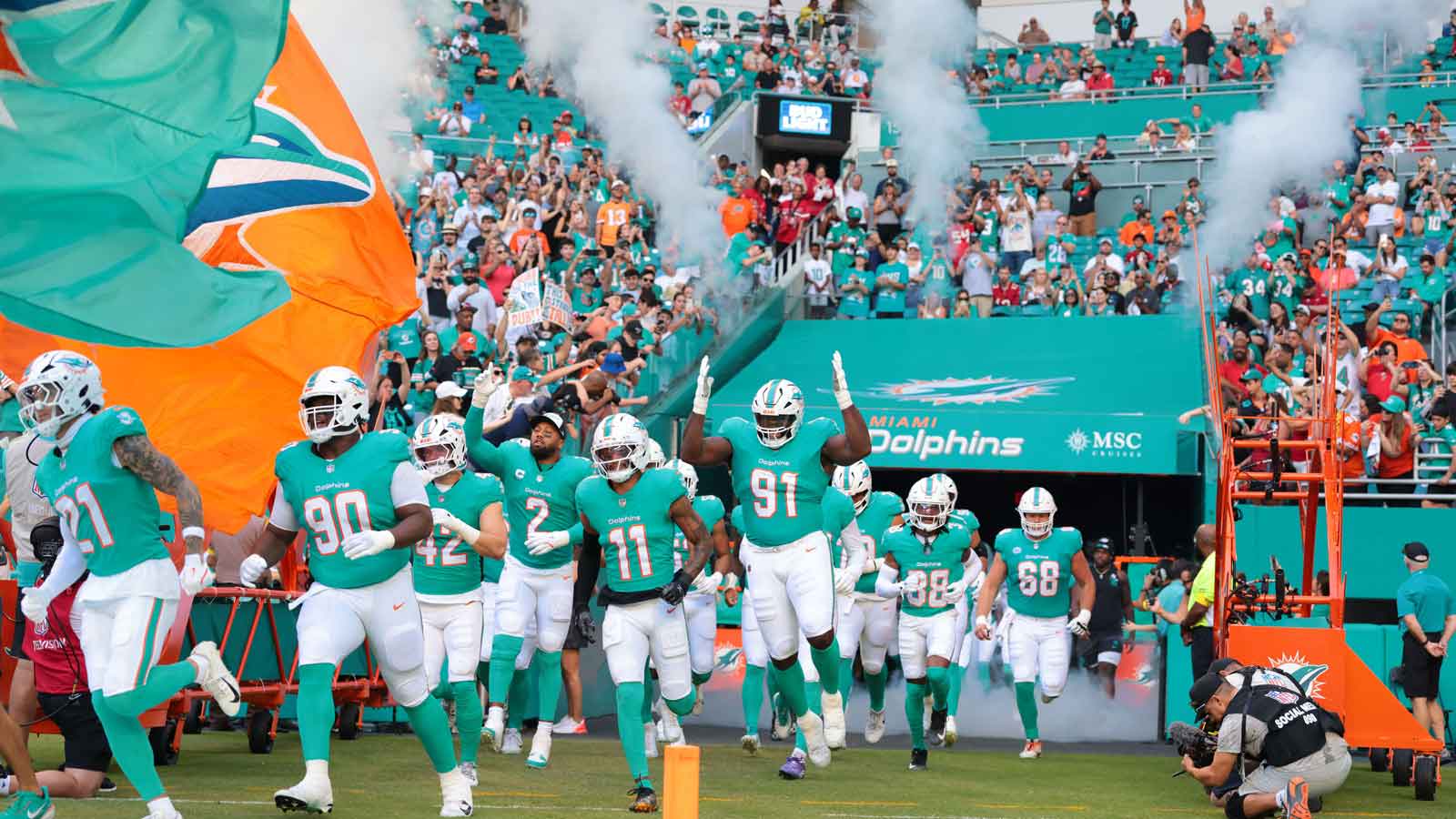
Miami’s offseason is already volatile before a single official move hits the wire. The Dolphins cleaned the house, brought in a new power structure, and inherited a roster with big-name talent, big-name contracts, and a quarterback situation that has shifted from uncomfortable to urgent. NFL Network reported that Miami is expected to move on from Tua Tagovailoa via trade or release, while noting the financial hurdles for any deal, but Tagovailoa’s contract is specifically complicated because Miami would need to absorb the $15 million option bonus.
This matters because it tells you what kind of team Miami is likely to be in March and April, not a franchise shopping at the top shelf for luxury items, but one trying to stabilize the most important position on the field and patch multiple roster leaks without lighting the cap on fire.
And, of course, when you look at the credible trade-target lists actually circulating right now, two names stand out as a realistic ”incoming” options tied directly to the Dolphins, even in a winter where most of Miami’s headlines are about who could be shipped out.
Bleacher Report’s team-by-team trade target roundup pegged Miami’s needs as quarterback, cornerback, and wide receiver, then listed two specific player targets they need. This season for the Dolphins is also more likely to be defined by trade assets, with Tagovailoa, Tyreek Hill, and Jaylen Waddle all being potential pieces on the block as the franchise tries to reset.
So yes, the big names in Miami are the names people keep bringing up as potential departures.
But there are still two trades that could really swing for them in practice. Who are they?
The quarterback bridge trade: Davis Mills
Steve Roberts-Imagn Images
Well, we understand that it’s not ”blockbuster” in the jersey-sales sense, but it becomes a blockbuster in consequence if Miami is serious about moving on from Tagovailoa. He is probably the likely path as the Dolphins move on from Tua, with the caveat that a trade would require them to absorb a large chunk of his guaranteed 2026 money. If that’s the playing field, then Miami needs a credible plan for snaps in 2026.
That’s why Mills is targeted as a logical one: he’s a veteran backup in Houston with system familiarity tied to Miami’s new offensive coordinator, Bobby Slowik. In other words, he’s not a trophy acquisition, but a light that they need to keep on all the time, being also a quarterback who lets a roster function while the franchise sorts out whether the long-term answer is a draft pick, a 2027 swing, or something else.
A Mills trade also has ripple effects beyond Miami, as quarterback movement is always a domino sport. If the Dolphins land a bridge QB via trade, they can be more selective in the draft. If they don’t, they can become a desperate bidder for any veteran option available, and desperation inflates the market for everyone.
The cornerback value play: Riley Moss
Ron Chenoy-Imagn Images
This one fits Miami’s needs, fits the cap reality, and fits the timeline of a regime that has to rebuild credibility fast. Moss is a young player on the final year of his rookie deal, the kind of acquisition that can help immediately while staying affordable.
And Miami’s 2026 roster problem isn’t just quarterback. If they are truly considering moving veteran money out the door, they’re going to need cost-controlled starters at the positions that decide games. Corner is particularly unforgiving in the AFC, where every week feels like it comes with a quarterback and a receiving corps capable of turning one coverage bust into 14 points.
So, Moss isn’t a headline name, but a young corner with a starter utility is one of the quickest ways to change a defense’s weekly ceiling. It also fits the profile of the kind of trade Miami can realistically execute while operating in a tight cap environment, without pretending it can outspend or outbid everyone for established stars.
And here we are, where Miami’s outgoing names still matter, even if only as a background. Dolphins entry explicitly raised the possibility that Tagovailoa, Hill, and Waddle could be on the block as they reshape the roster and stockpile picks. It needs to underscore the same underlying issue: the contract math is a real obstacle, and any Tagovailoa trade is likely to require Miami to eat money, and with Tyreek Hill in a murky place after an injury, Miami needs new players as soon as possible.
That’s why the incoming trade targets being discussed around Miami are strategic and affordable.
Do those two moves guarantee anything? No.
But they would change the trajectory of Miami’s offseason in a way that forces the league to react, because once the Dolphins stop looking like a franchise in limbo at quarterback and corner, they stop being a soft landing spot on the schedule.
And in the AFC, ”not being a soft landing sport” is the first step toward being relevant again.
The post 2 potential Dolphins blockbuster trades that would shake up entire 2026 offseason appeared first on ClutchPoints.
