
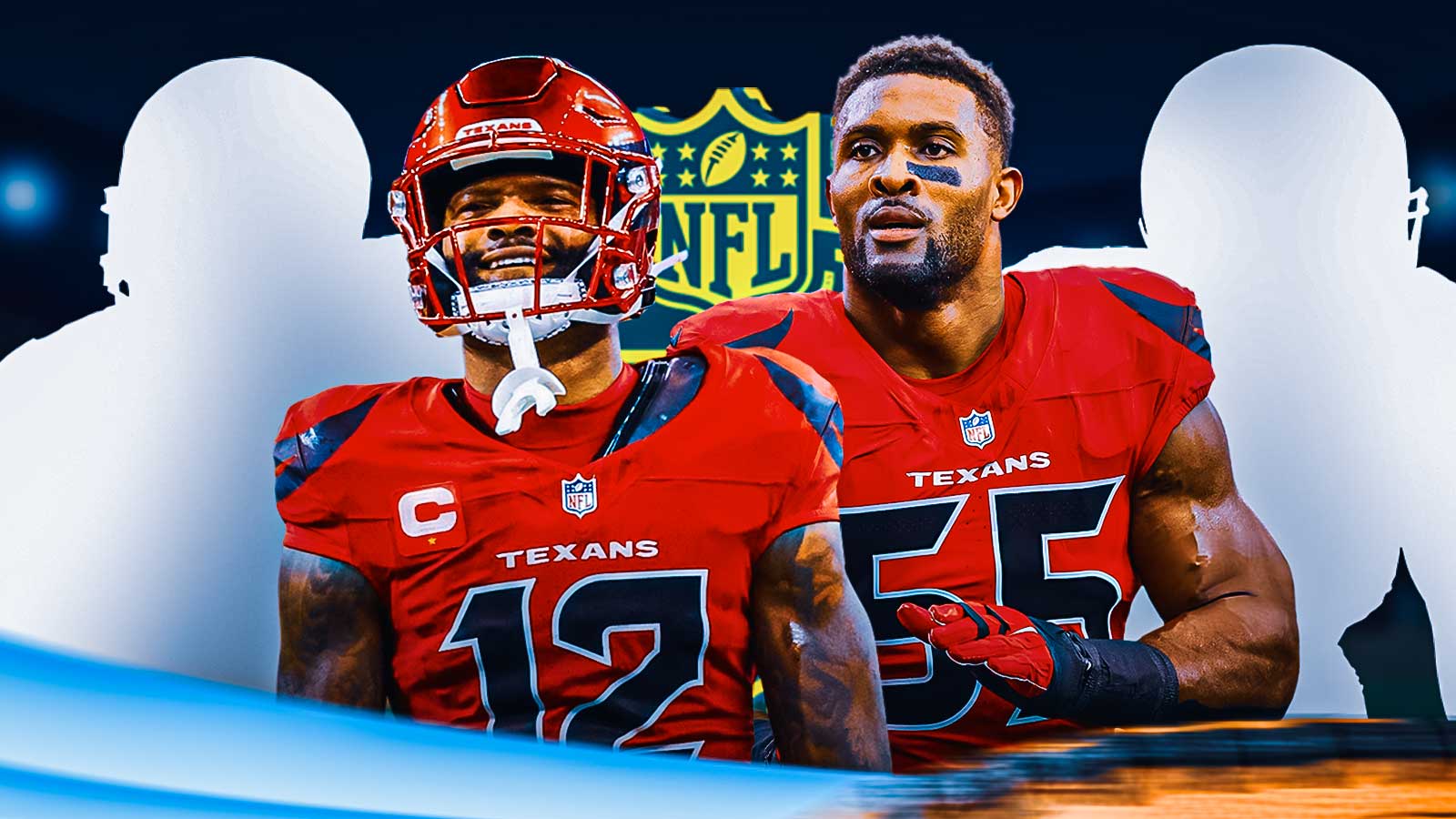
The Houston Texans have officially crossed the line from promising to dangerous. This is a team everyone expects to compete not just for a playoff spot but for a Super Bowl spot. And with that expectation comes a different kind of pressure. Every roster move must now serve a singular purpose: winning in January. With that, the 2026 NFL Draft will now be about refining a championship machine. That means identifying not just who fits, but who doesn’t. Because in a roster this complete, the wrong pick can disrupt balance. For Houston, the real test on draft night will be having the discipline to avoid the wrong move.
Free agency signals championship intent
Junfu Han / USA TODAY NETWORK via Imagn Images
Houston fans will remember the 2026 free agency period as the moment the Texans decided to stop flirting with greatness and started demanding it. GM Nick Caserio was aggressive. The marquee move was undoubtedly the acquisition of David Montgomery via trade from the Detroit Lions. Houston also prioritized continuity on the offensive line, securing Pro Bowl guard Wyatt Teller and extending Trent Brown. These moves should keep CJ Stroud clean and establish a physical identity that can travel into January’s freezing climates.
This was really about reinforcing philosophy. The Texans understand that playoff football requires versatility. By strengthening both the passing attack and the ground game, Houston has positioned itself to dictate terms rather than react.
Defensive reinforcements
On the defensive side of the ball, the Texans fortified the trenches and the secondary with veteran savvy. Bringing back Sheldon Rankins and extending Danielle Hunter ensures that the pass rush remains a nightmare for opposing quarterbacks. The secondary also received a significant boost with the signing of safety Reed Blankenship.
The result is a roster with very few glaring weaknesses. Houston has depth, experience, and a clear identity on both sides of the ball. However, when your roster is this strong, the temptation to simply take the “best player available” becomes dangerous. Because not every talented player fits what you’ve built.
The final piece
Despite the influx of talent, Houston still badly needs a dominant, young interior presence on the offensive line to eventually succeed the aging veterans. Sure, the Texans have patched the holes with Teller and Ingram. Still, the long-term viability of the pocket depends on finding a high-ceiling anchor. Houston cannot afford a single weak link in the middle of their protection. This draft must be about ensuring that the ground game stays efficient and the face of the franchise stays upright through the 2026 season and beyond.
Avoid Anthony Hill Jr
At first glance, Anthony Hill Jr looks like a perfect schematic fit. He’s explosive, versatile, and capable of creating chaos in the backfield. In a vacuum, he’s exactly the kind of hybrid defender that modern defenses covet. However, Houston doesn’t need another playmaker at linebacker. They need stability in the trenches. Using a premium pick on Hill would be a misalignment of priorities.
The Texans have already committed significant resources to the linebacker position. With Azeez Al-Shaair anchoring the unit and EJ Speed extended as a key contributor. Adding Hill would create redundancy, not improvement.
DeMeco Ryans has built a system that emphasizes clarity, communication, and reliability. Every piece must understand its role and execute it with precision. Hill, for all his talent, would require adjustment. For the Texans, that’s a risk not worth taking.
Case against Mike Washington Jr
If Hill represents redundancy on defense, Mike Washington Jr represents temptation on offense. The Arkansas running back is a highlight machine. His 4.33-second 40-yard dash turned heads, and his ability to break big plays makes him one of the most exciting prospects in the class. Washington may thrive elsewhere. In Houston, however, he would be a redundant asset. A player whose presence doesn’t elevate the team in the areas that matter most.
The Texans have already reshaped their backfield with the addition of Montgomery. He brings physicality, reliability, and consistency. Behind him, the roster features capable rotational options who fit the system’s identity. There is no gap to fill here.
Drafting Washington would be a luxury pick. And luxury picks are dangerous for teams with real needs elsewhere.
The offensive line, particularly the interior, still requires long-term investment. That’s where the draft capital should go. That’s where the future of the offense will be determined.
Houston’s championship push
Troy Taormina-Imagn Images
The Texans have done the hard part. They’ve built a roster capable of competing with the best teams in the league. Now, it’s about refinement and making the right decisions at the margins.
Avoiding players like Anthony Hill Jr and Mike Washington Jr isn’t about questioning their talent. It’s about understanding context. It’s about recognizing that fit, timing, and roster balance are what separate contenders from champions. In a draft filled with opportunity, Houston’s greatest advantage may be its ability to stay disciplined.
The post 2 players Texans must avoid picking in 2026 NFL Draft appeared first on ClutchPoints.
